art-culture
An Elder’s Dream: “I Want to Paint My Own Memorial Portrait”
An 81-year-old woman arrives at her first art lesson determined to paint her own memorial portrait. Her teacher, meanwhile, has forgotten what she wants to paint. Discover the ten lessons at the heart of An Elder’s Dream, a webtoon turned stage play now preparing for its second Seoul run, and explore how audiences can take part in bringing it to the stage through YEATU.
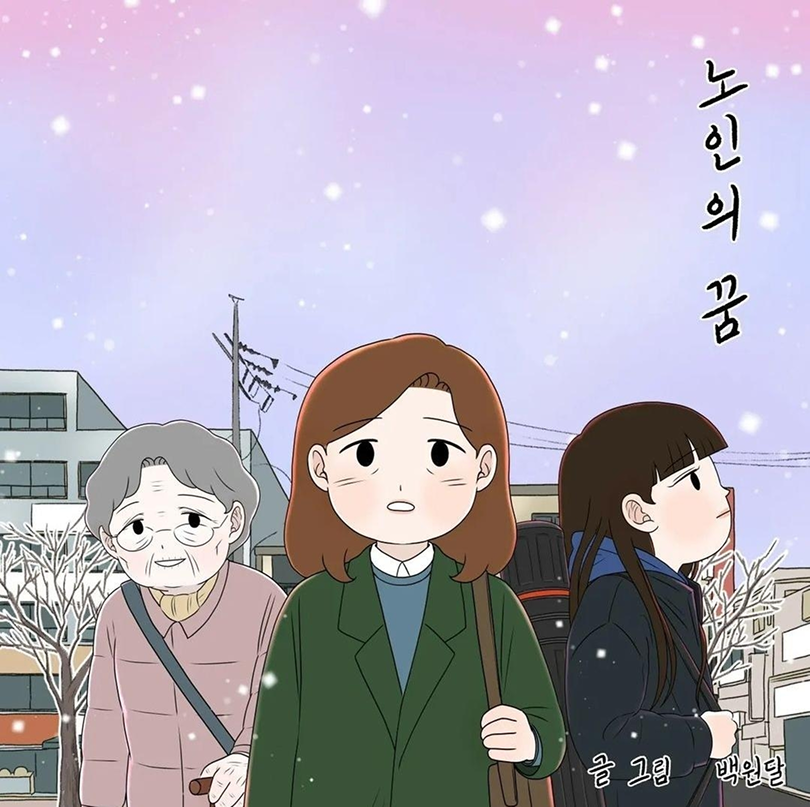
An Elder’s Dream: “I Want to Paint My Own Memorial Portrait”
From Webtoon to stage
At her very first art lesson, an elderly woman says she wants to paint the portrait that will be displayed at her funeral.
Not flowers. Not trees. Her own face. The art teacher is taken aback by a request from someone who still needs to learn how to hold a pencil. But the woman will not be talked out of it. If this is the face she will leave behind for others to remember, she wants to paint it herself.
That unusual enrollment request opens An Elder’s Dream, a webtoon by Baek Won-dal. The student is 81-year-old Sim Chun-ae. Her teacher is Yoon Bom-hee, who has put aside her dream of becoming a painter and now runs an aging art academy.
With enrollment falling and family relationships tangled, Bom-hee has pushed her own painting to the sidelines. Then Chun-ae arrives, and ten drawing lessons begin. One woman sits down to paint the face she will leave behind; the other sits opposite her to teach her how.
As the lessons continue, though, something begins to stir in the teacher, too.
A memorial portrait for a first painting? What is a teacher to do?
A portrait is an ambitious place to start for someone who has never learned to draw. Bom-hee suggests something easier, like flowers or trees. First, get comfortable making lines; then practice drawing shapes. One step at a time.
But for Chun-ae, it has to be her own face. That is the whole reason she came.
She does not have a memorial photograph she likes.
She could have a new photograph taken. Instead, Chun-ae chooses an art academy. Rather than pick a face from pictures someone else has taken, she decides to draw it herself, even though she has never studied art.
What expression will she choose? How does she want to be remembered? Putting her own face on paper will mean looking at herself longer than usual: studying the mirror, drawing a line, and changing it when it does not feel right.
For Bom-hee, it is a difficult first assignment. For Chun-ae, it is her own face, something she does not want to leave to someone else. This is not a lesson that can be redirected toward flowers.
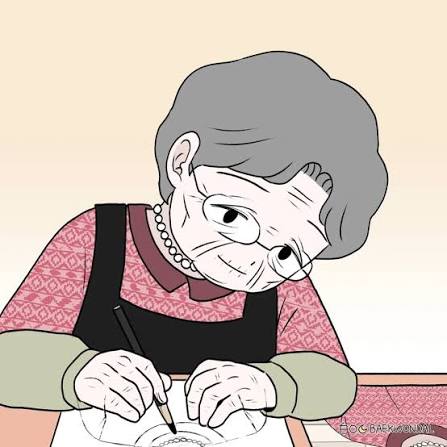
The student knows what she wants to paint. The teacher has forgotten.
Teaching art and making her own art have somehow become two very different things for Bom-hee.
She has just turned fifty. Once an aspiring painter, she now spends more time worrying about dwindling enrollment and keeping the academy running. She works surrounded by brushes and paint, yet keeps putting off the pictures she wants to make.
Life outside the academy is no easier. A breakup with a longtime partner, worries about her newly formed family, unresolved feelings toward her father: Bom-hee, too, has plenty she would like to sit down and tell someone.
The student who appears before her is the opposite. Chun-ae may not have drawing skills, but she knows exactly what she wants to paint. Even when told it will be difficult, she is ready to try learning.
Bom-hee is the teacher, yet it is Chun-ae who keeps drawing our attention. It is hard not to imagine that Bom-hee once had just as many things she longed to paint.
Across ten lessons, the two women bring their life stories to the table. A conversation that begins with drawing a face leads to family and long-buried hurts. Looking closely at her student’s work, Bom-hee begins to look inward, too.
Of course, learning to paint one picture cannot resolve every problem. Chun-ae’s self-portrait and Bom-hee’s everyday life are both still works in progress.
After ten lessons, will Chun-ae be able to say she is happy for her painting to serve as her memorial portrait? And what will remain with Bom-hee, who helped her bring that face to life?
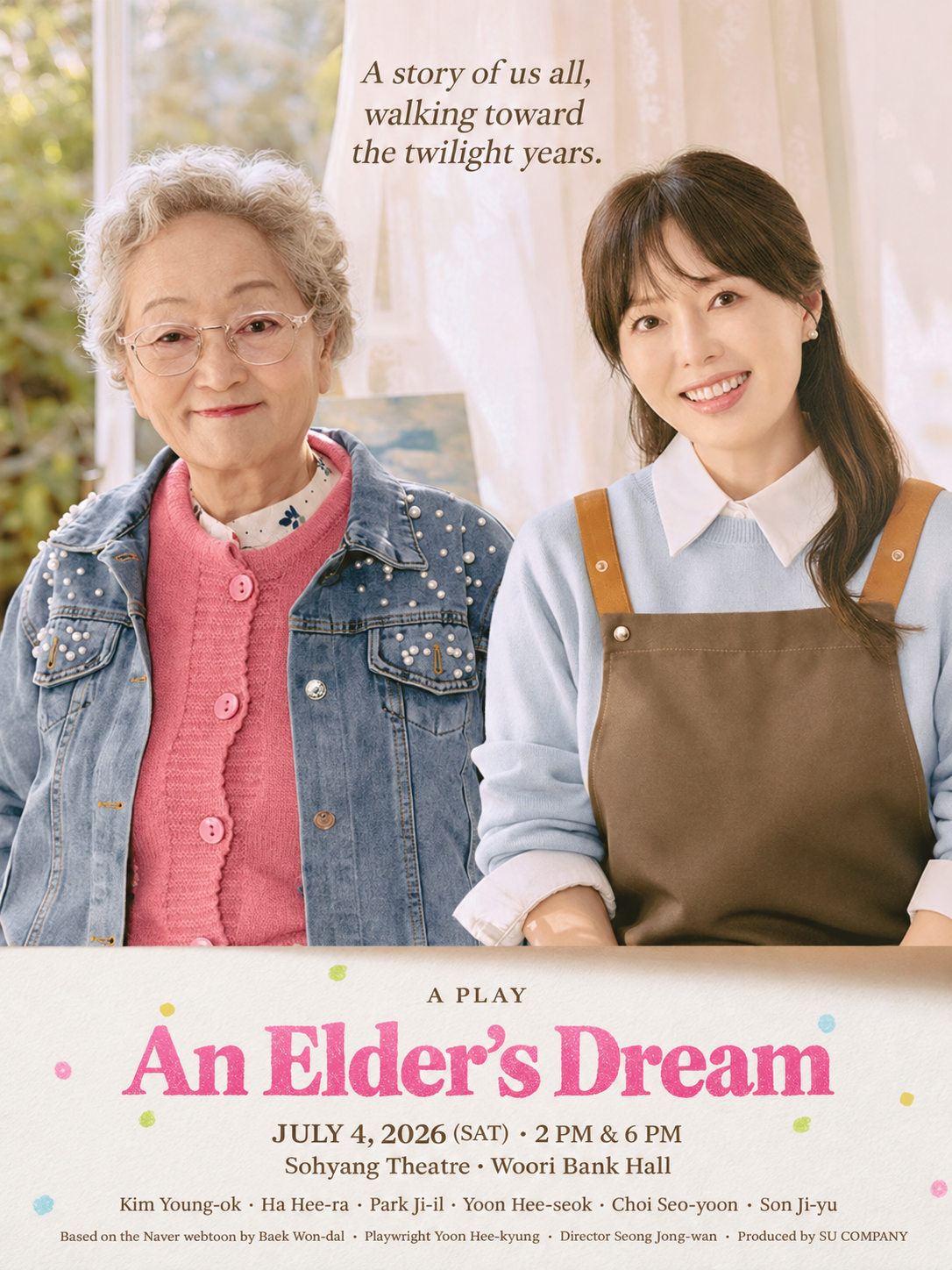
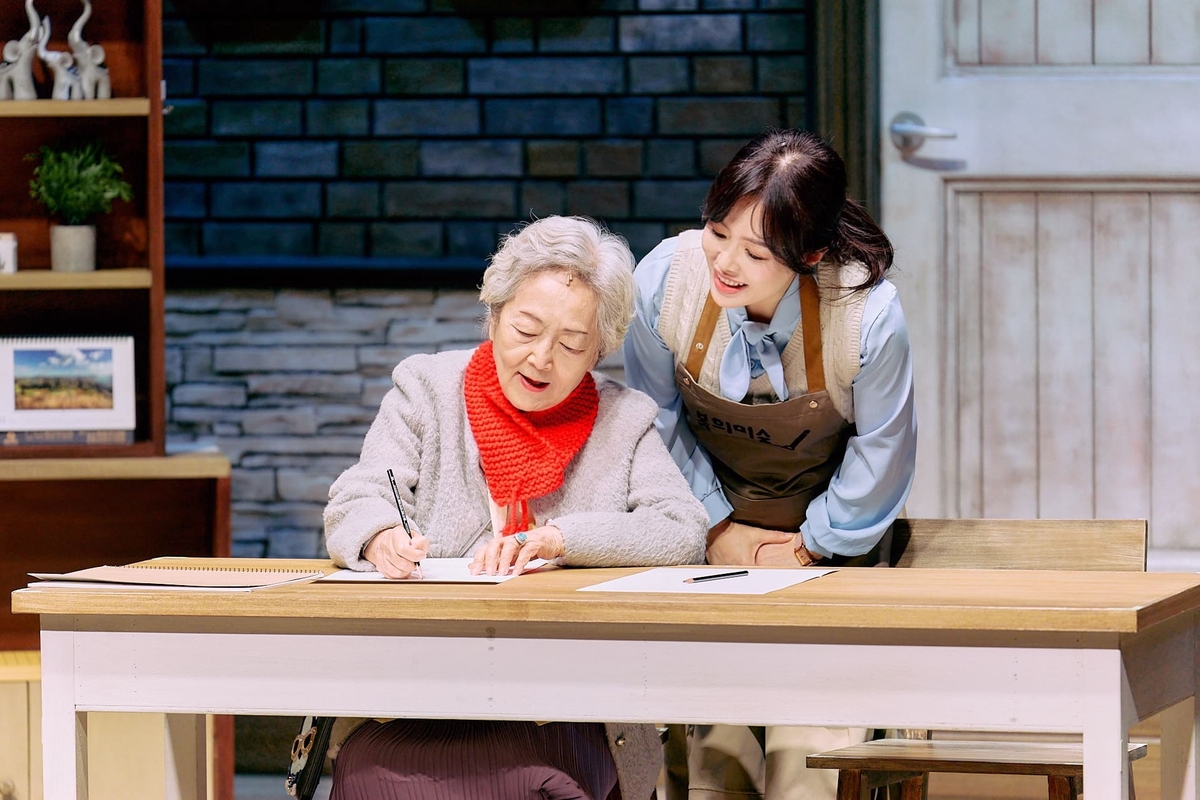
With Kim Young-ok, Kim Yong-rim and Son Sook as Chun-ae, one run was never going to be enough
The two women from the webtoon have also sat opposite each other on a real stage. Produced by Soo Company, the play An Elder’s Dream premiered at LG Arts Center Seoul’s U+ Stage from January 9 to March 22, 2026.
Kim Young-ok, Kim Yong-rim and Son Sook shared the role of Chun-ae. Ha Hee-ra, Lee Il-hwa and Shin Eun-jung played Bom-hee. Even reading the cast list suggests a different atmosphere for every lesson.
The same request for a memorial portrait can sound very different depending on who says it: an offhand remark, a smiling insistence, or a plea after a brief pause. On stage, actors supply the voices and expressions that webtoon readers once imagined.
We also see Bom-hee’s reaction to Chun-ae’s words right in front of us, including the small silences between lines. That is part of what makes the play intriguing even for people who already know the story.
After its Seoul premiere, the production met audiences on a regional tour. Now, building on the audience response, a second Seoul run is being prepared. The art academy is scheduled to reopen on stage at Sejong Center’s M Theater from January 6 to March 1, 2027.
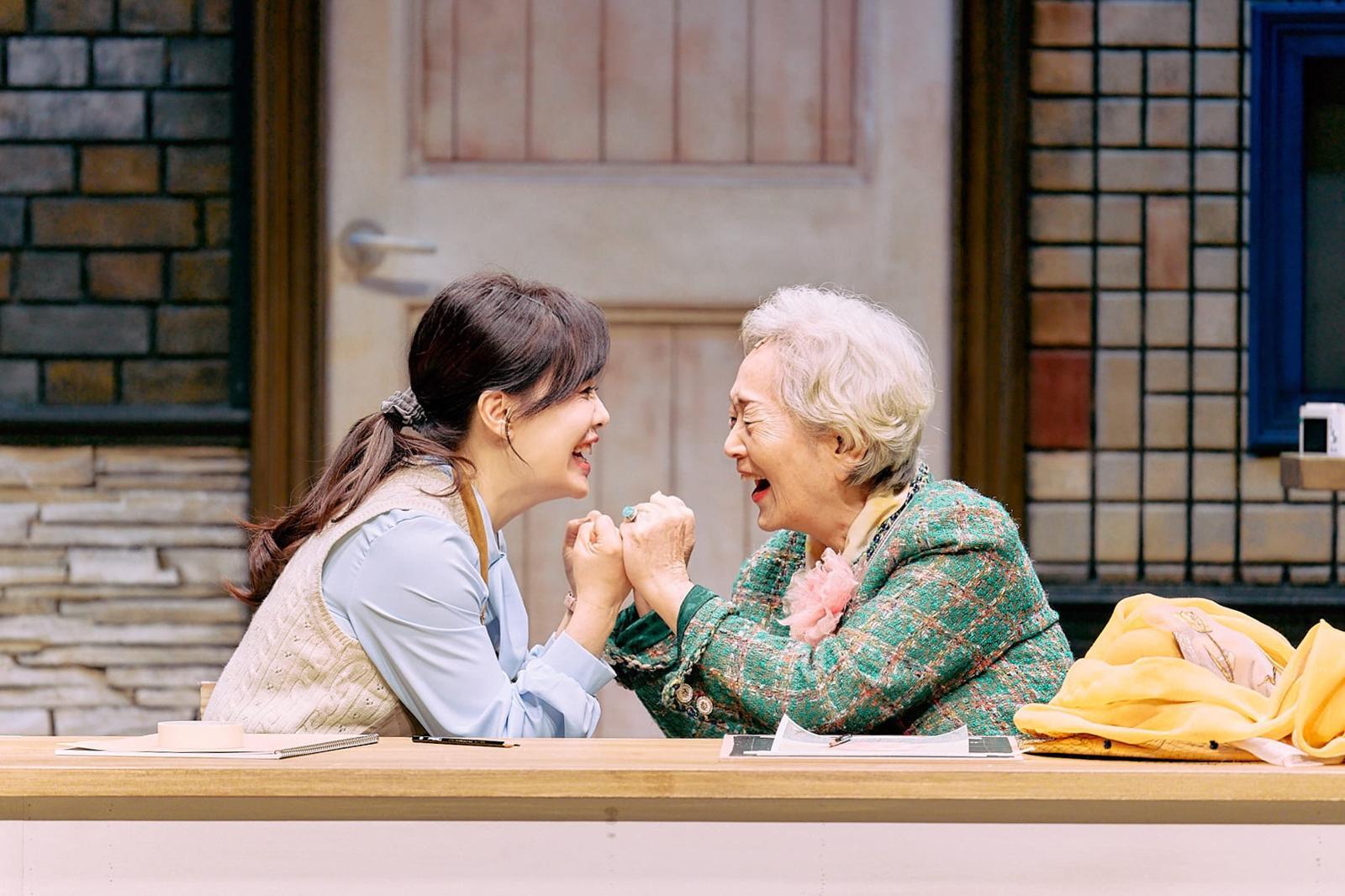
This time, audiences can help bring the next production to life
When we wait for a favorite production to return, we usually check when tickets go on sale, see who is performing, decide who to go with, and choose our seats.
For An Elder’s Dream, another way to get involved is also taking shape: taking part in the process of bringing its second Seoul run to the stage.
YEATU is making that connection. A product that allows participation in the production of the revival of An Elder’s Dream is now listed on the platform.
View the An Elder’s Dream product

If Chun-ae and Bom-hee’s story has stayed with you, this is news worth following alongside the performance schedule. Next time you take your seat, you may find yourself looking at the two women on stage a little differently.
Chun-ae was not sure she could paint well. She opened the door anyway.
Let us return to that first lesson. Chun-ae has no paintings to show and no certainty that she can draw well. What she does have is one thing she wants to ask.
“Teacher, can I learn to paint what I want to paint?”
She might be told it is too difficult. It might take longer than she expects. Even so, Chun-ae opens the academy door, steps inside, and asks for the lesson she wants.
After meeting her, you may think again about the class listing saved on your phone. The one whose schedule and price you checked, but never signed up for. The screen you closed while wondering whether you would be any good, or whether it was too late to start.
Chun-ae began without knowing whether she could finish her self-portrait. We want to know what happens next because she first decided to give learning a try.
Could each class we have saved hold a story we have not started yet?
Chun-ae and Bom-hee’s next lesson, and a new way to be part of the stage that brings it to life.
Follow YEATU for news about the revival of An Elder’s Dream and the availability of its participation product.
YEATU brings people together to help films, performances and exhibitions reach their audiences. You can take part through reward-based support or investment.
Read next
A Beginner’s Guide to Art Fairs: From Planning Your Route to Photo Etiquette