investment-news
Who Pays for a Concert Before the First Ticket Is Sold?
Venue bookings and artist contracts need funding before the audience arrives. Where does that money come from, and what should investors examine? Follow the money behind the stage through YEATU’s investment guidance and the Kobe and Singapore K-pop joint concert projects.

Tickets have not gone on sale. The bills have already started.
Booking the venue. Contracting the artists. Preparing the stage and sound. For audiences, the story begins when tickets go on sale. For the people making the show, several contracts are already in motion.
We see a few hours on stage. Before that happens, someone has to arrange the production funding.
The money moves before the first ticket
A concert cannot always be built one step at a time using ticket proceeds. In its annual report, global concert promoter Live Nation explains that it pays some artist fees and production expenses before tickets go on sale. Artist fees, production, advertising and venue rental all contribute to the cost of putting on a show.
That creates a gap between when money is needed and when revenue arrives. Outside investment is one way to help bridge it. But concerts do not all raise capital or distribute returns in the same way. The rights an investor receives and the source of repayment depend on the contract.

Stage, sound and venue preparations require funding before the audience arrives.
I know the music. Where do I find the investment proposal?
Buying a ticket is familiar: open a booking site, choose a date and pick a seat. Investing in the production raises a less familiar question: who do you even contact?
For a privately offered investment, budgets and contract terms are not displayed alongside the seating plan. Knowing a concert well and accessing the materials needed to evaluate an investment are different things.
It is easy to wonder whether you need an introduction. YEATU provides a place to make that first inquiry. Its current service, however, is private investment guidance for institutional investors and individual professional investors. It does not mean that every individual can invest immediately.

Looking beyond enjoying a concert to finding investment information and an inquiry channel. AI-generated conceptual illustration.
What can investing in content offer?
Potential returns are one reason to consider content investment. Another is the chance to examine a performance you care about from a production and business perspective.
Help finance a production. When a project raises production capital, investors can help fund the work needed before it reaches an audience. The actual use of funds must be checked in the investment materials.
Pursue financial returns under a contract. Unlike a ticket purchase, an investment has contractual terms for repayment and returns. A successful show does not automatically mean a profitable investment, and neither principal nor returns are guaranteed.
Focus your assessment on a specific project. You can examine what is being produced, where it will take place and how its budget will be used. Costs and repayment arrangements matter alongside the names of the artists and venue.
Learn about the business behind the stage. Which expenses are paid first when ticket revenue arrives? How long does settlement take? Asking these questions can deepen your understanding of the content you enjoy.
A good performance and sound investment terms need separate assessment. Weak sales, higher costs, cancellation or postponement can cause losses or delay repayment. Overseas concerts also call for a close look at currency exposure and local settlement terms.
A closer look at the stages in Kobe and Singapore
YEATU’s investment page features the Kobe K-Pop Joint Concert (GLION ARENA) and the Singapore K-Pop Joint Concert (APEX @ EXPO).
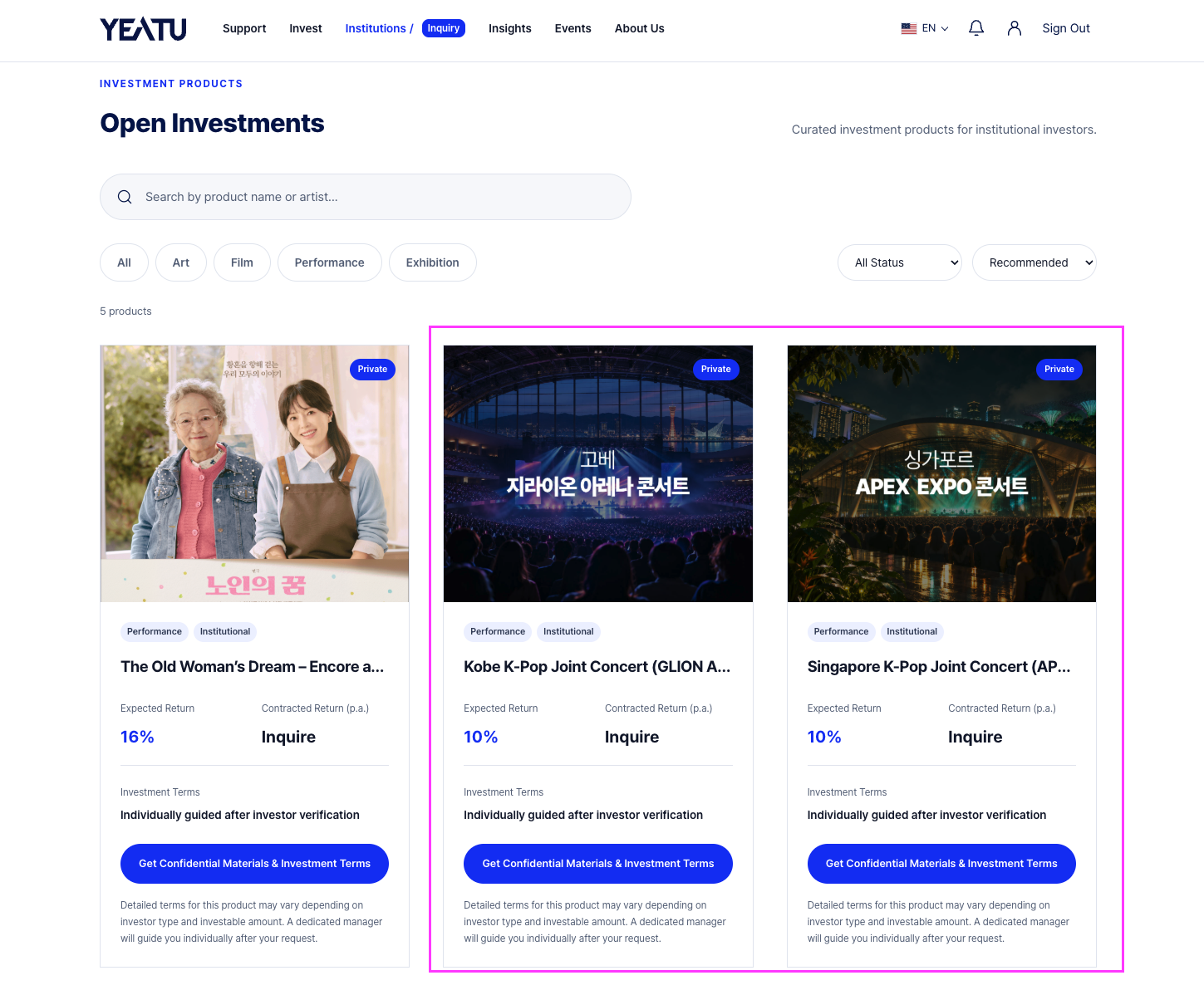
YEATU screenshot supplied by the user, November 12, 2026. This is a product listing highlighting the two concerts, not a photograph of the events. Expected returns shown are not fixed or guaranteed returns. Current terms must be confirmed individually. Text within the product artwork remains in Korean as supplied.
These are two projects in different cities and venues. Sharing a K-pop concert format does not make their budgets, contracts or repayment arrangements identical. Each project’s confidential materials and terms need to be reviewed separately.

Similar concerts still require separate reviews of budgets, contracts and repayment schedules. AI-generated conceptual illustration, not actual project documents.
YEATU describes a process of inquiry and consultation, investor approval, a non-disclosure agreement (NDA), and review of materials before an investment decision. Specific terms are provided individually according to investor type and investable amount.
Start by asking whether you are eligible, how the funds will be used, and in what order and on what timetable repayment is intended. The button below leads to the investment projects, including these two concerts, and the inquiry process.
Explore concert projects and eligibility
When the house lights go down, we look towards the stage. Understanding the contracts and funding that brought it to life may make the next ticket announcement look a little different.