investment-news
Wealth Isn’t About Intelligence. It’s About Behavior — What The Psychology of Money Teaches Us About Building Wealth

Wealth Isn’t About Intelligence. It’s About Behavior — What The Psychology of Money Teaches Us About Building Wealth
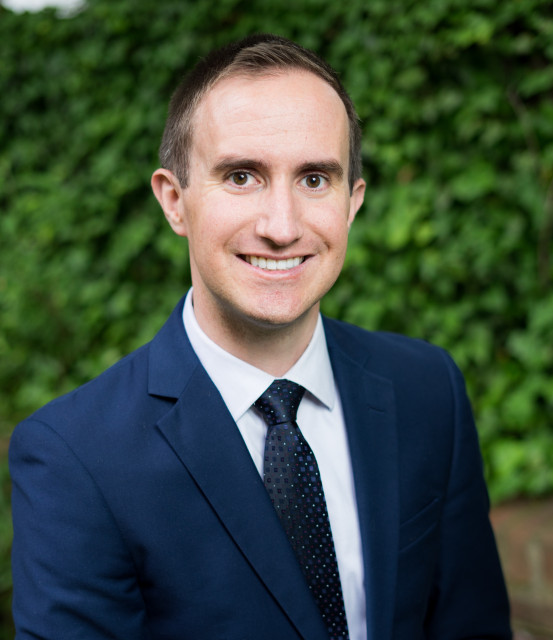
Morgan Housel spent years as a columnist for The Wall Street Journal and The Motley Fool before writing The Psychology of Money. Five years after publication, the book has sold more than 10 million copies worldwide, according to its publisher, Harriman House. What's notable is what it doesn't do: no formulas, no models, no market calls. Housel's argument fits in one line — doing well with money has less to do with intelligence and more to do with behavior.
The first paradox he tackles is why smart people so often lose money. His go-to example is Isaac Newton, who lost a fortune in the South Sea Bubble of 1720 despite being one of the greatest scientific minds in history. Handling numbers and handling emotions, Housel argues, are entirely different skills. The more complex markets get and the more information floods in, the more this holds — outcomes are decided less by what you know and more by how you behave under pressure.

The second is that getting rich and staying rich require opposite instincts. Getting rich rewards risk-taking and optimism. Staying rich rewards the reverse — avoiding catastrophic losses, staying disciplined, protecting what you already have. Housel frames good investing not as making consistently correct calls, but as consistently avoiding big, unrecoverable mistakes. Warren Buffett is his favorite illustration: roughly 99% of Buffett's net worth was built after he turned 65. Not because his returns were extraordinary, but because he stayed in the game for an extraordinarily long time.
If you're drawn to that kind of patience more than a flashy return-rate screenshot, that's the instinct YEATU is built around
The third is compounding, and Housel treats it as a story about patience rather than math. Invest $10,000 at a 10% annual return and after 10 years you have roughly $25,900; after 20, about $67,300; after 30, around $174,500. Nothing dramatic yet. But run it to 40 years and it’s about $452,600 and to 50, roughly $1,173,900. The curve doesn’t jump; it steepens the longer it’s left alone. Wealth, in Housel’s framing, comes from time, not timing.

The fourth is the role of luck and risk, which he says have to be weighed together. The same decision, made by two different people, can produce wildly different outcomes — you roll the dice, but you don't control what comes up. So he warns against two habits at once: copying people who succeeded, since you can't see which dice they rolled, and comparing your own unseen struggles to someone else's visible highlight reel.
The last idea is the one people quote most: "Wealth is what you don't see." It sounds counterintuitive at first, because wealth usually gets pictured as things — a nice car, an expensive watch, a bigger house. Housel's point is the opposite. Those are money already spent, not wealth. Real wealth is the unspent asset nobody can observe: the savings and investments no one sees, the debt that's already been paid off, the discipline behind a modest lifestyle. Someone living quietly within their means can, in practice, be far wealthier than someone financing a visible one with debt. Wealth, in this reading, is optionality — not display.
One thread runs through all five ideas: money is a psychology problem before it's a math problem, and that psychology is built slowly, through restraint, patience, and a willingness to watch something for a long time before it pays off.
That's the same instinct cultural investing asks for. Backing a piece of content well isn't a flashy return-rate screenshot — it's staying with an artist or a project long enough for its value to surface. YEATU isn't built around owning one already-famous, finished work; it's built for putting small amounts steadily behind stories that haven't finished being told yet. Like compounding, that kind of participation only shows its real value with time.
Start compounding your participation in culture — visit YEATU →