art-culture
Why Do Brands Collaborate with Artists? Five Values They Look For

Why Do Brands Collaborate with Artists? Five Values They Look For
What brands seek from artists is not simply a ‘beautiful outcome.’ They are looking for memories and relationships that are difficult to create through their existing language alone. Many people searching for brand–art collaborations hope to find one correct answer. What matters more, however, is understanding why a brand is looking for an artist—and learning to describe your own work in terms the brand can understand. This article looks at five values brands can gain through collaboration, and what artists can prepare from a university project through to a first professional commission.
‘You’re Doing Well’ Is Not Enough to Open the Next Door
An artist’s path does not end with a single job title. Making work, meeting people, proposing projects, reviewing agreements, and refining the language around your practice all move together. When preparing for a brand–art collaboration, it is often more useful to ask not ‘What should I become?’ but ‘What problem is this brand trying to solve right now, and what value can I help create?’
For emerging artists, a record that can be understood often matters more than a polished list of credentials. Even a small project—a class assignment or an independent experiment—can become useful evidence in a portfolio, collaboration proposal, or meeting if you can identify which of the five values below it demonstrates and document it clearly.

Five Things Brands Look for When They Work with Artists
1. Turning a Brand Story into a Sensory Experience
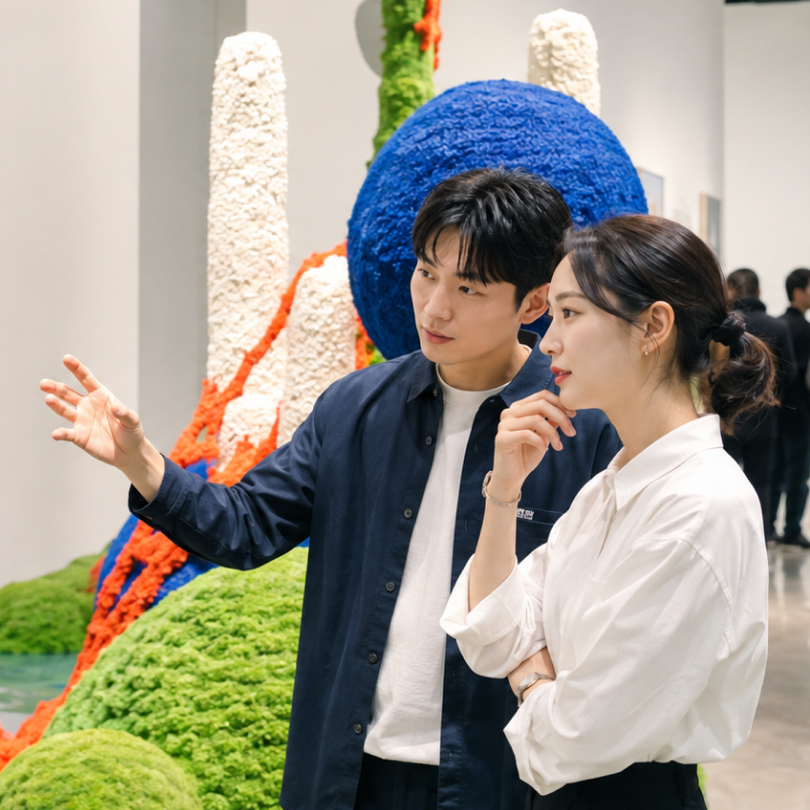
Artists can translate messages that text and logos cannot carry alone into a sensory language of colour, texture, sound, and space. Brands are not seeking decoration on top of a logo; they are looking for a collaborator who can make their story felt. Practical tip: state the sensory qualities your work explores and the feeling it helps audiences experience in the opening line of your portfolio.Artists can translate messages that text and logos cannot carry alone into a sensory language of colour, texture, sound, and space. Brands are not seeking decoration on top of a logo; they are looking for a collaborator who can make their story felt. Practical tip: state the sensory qualities your work explores and the feeling it helps audiences experience in the opening line of your portfolio.
2. Giving People a Reason to Stay in a Space or at an Event
The success of a pop-up or brand event depends in part on how long visitors stay and how deeply they engage. Live drawing, on-the-spot calligraphy, and other visible processes invite people to stop and watch. Practical tip: document not only the completed work but also audience interaction and dwell time; participatory processes can be powerful evidence in a proposal.
3. Meeting New Audiences Through Culture3. Meeting New Audiences Through Culture
Even substantial budgets cannot always give a brand access to cultural communities, local scenes, or audiences that already trust an artist. Collaboration can reach people as a natural extension of their taste rather than as an advertisement. Practical tip: explain which audience responded to a project, why it responded, and what relationship your work has already built with that audience.
4. Addressing Social Issues with Credibility4. Addressing Social Issues with Credibility
Practical tip: In your portfolio, explain which audience responded to a project and why. Alongside the quality of the work, brands want to understand the audience relationship your practice has already built—whether through followers, exhibition visitors, or a community.
5. Creating Content Assets and a Lasting Record5. Creating Content Assets and a Lasting Record
Images, video, installation photography, and audience-reaction clips can become long-term content assets across social media, advertising, catalogues, and archives. Practical tip: agree in advance on permitted formats, channels, terms of use, and credit requirements, so the collaboration can be reused without avoidable copyright disputes.
Before You Begin: A Checklist
- Have you described your work in both a 50-character and a 150-character version?
- Have you distinguished your role from those of collaborators in every featured project?
- Have you identified which of the five values each project demonstrates?
- Have you stated the deliverables, timeframe, and resources in terms the other party can understand?
- Have you checked the rights, sources, and reuse scope for images, text, music, and other materials?
- Have you chosen one next step: update your portfolio, request a conversation, look for an open call, or apply for a consultation?

Frequently Asked Questions
Q. Can I begin even if I do not have much experience yet?
A. Yes. For emerging artists, the context of the work and the direction you want to take matter more than the number of projects on your résumé. University work, personal experiments, and small exhibitions, performances, or gatherings can all become meaningful examples when you explain the process and your role.
Q. Can I include university assignments in my portfolio if I have no professional brand-collaboration experience?
A. Yes. Brands are often more interested in which of the five values you can create than in whether you have already worked with a brand. If a university project designed a particular sensory experience or encouraged audience participation, it can support Value 1—sensory experience—or Value 2—dwell time and participation. Document the project background, objective, your role, and audience response, and you can use it in a proposal much like a professional case study.
Q. Where should I look for opportunities?
A. Look beyond open calls. Explore the themes and audiences of spaces, institutions, brands, and projects you care about. Once you have found a point of connection—one of the five values above that you can contribute—start a conversation with your portfolio and a small, focused proposal. That approach is more likely to build a lasting relationship.
Q. What should I confirm before my first collaboration with a brand?
A. Confirm the scope of use for the deliverables—where they will appear and for how long—the credit format, ownership of the original copyright, and how and when you will be paid. If the collaboration is expected to involve content reuse, discuss early that compensation may vary according to the agreed reuse scope.

YEATU’s Perspective
Culture does not gain value only after a finished result becomes widely known. Value is also created as artists refine their own language and meet their audiences. YEATU is exploring ways for more people to take part in the growth of cultural content.
Discover and participate in cultural content → Explore YEATU
Looking for a space to connect with fellow artists? → Get started with Everlynq