art-culture
Your First Art Fair: A Complete Guide to Navigating, Viewing, and Photographing
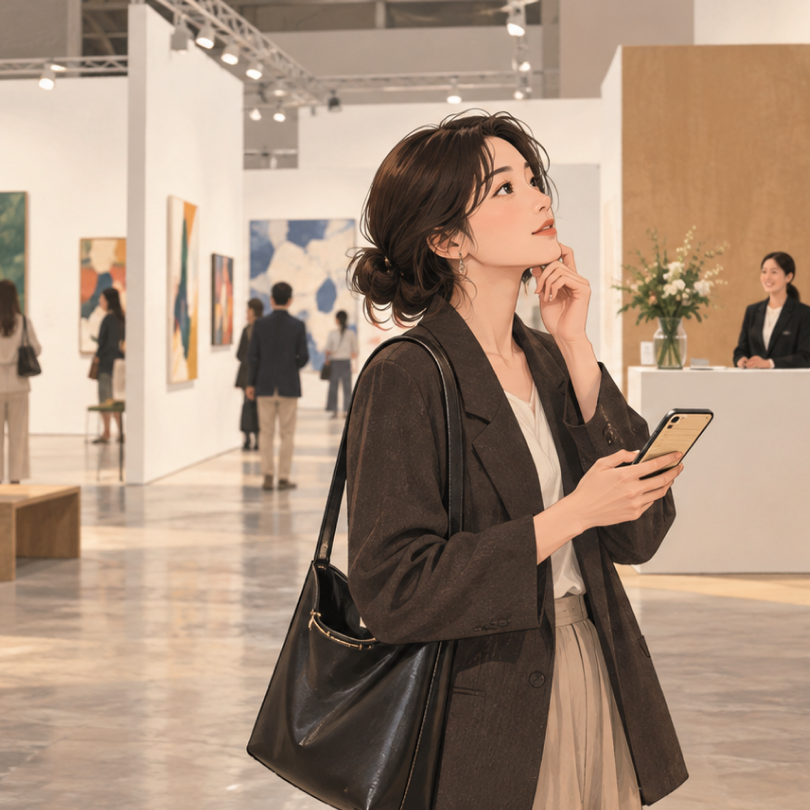

Your First Art Fair: A Complete Guide to Navigating, Viewing, and Photographing
This guide is for first-time art-fair visitors. We will walk through what to look at, whether it is okay to ask about prices, when you can take photos, and how to buy a work that stays on your mind even after the fair ends. No specialist knowledge is required. Using PIATE 2026 as our guide, here are six practical tips for your visit, plus an easy way to revisit and purchase works after the exhibition.
Most of us have paused in front of a booth, unsure where to start, and simply moved on. One idea appears again and again in art-fair guides: curiosity matters more than expertise.
1. Give Yourself Time to Find Your Way
Do not try to see everything at once. Spend your first 20 to 30 minutes simply walking through the space rather than reading every wall label.
It is enough to make a mental note of the booths that catch your eye and the works that make you pause. Looking up the participating galleries beforehand can help you shape your route, and there is nothing wrong with taking a short break in a space you enjoy.
The goal is not to complete every booth—it is to find one work you want to see again.

2. Talking to Galleries: Asking the Price Is Not Rude
Gallery staff welcome conversation. Feel free to ask questions such as, “What inspired this work?” or “What materials does the artist usually use?”
Once you are comfortable talking with galleries, the visit becomes much more relaxed. The same applies to price inquiries: asking, “How much is this work?” is a completely natural part of the process. You do not need to make a decision on the spot.
If you are interested, leaving your contact information or taking a business card is more than enough.
3. How to Read an Artwork Label
A label usually includes essential details such as the artist’s name, the title, the year it was made, the medium, and its dimensions.
Artwork labels may feel unfamiliar at first, but they are straightforward. If a work is titled “Untitled,” it simply means the artist did not give it a separate title. Materials are easy to read, too: “Oil on canvas” means the work was painted with oil paint on a canvas surface.
Just a few lines can give you a useful starting point for understanding a work.
4. Photo Etiquette Depends on the Situation
Personal, non-commercial photography is often allowed without flash or a tripod, but rules can vary by gallery, booth, or artwork. Check the notice at the booth entrance first; if you are unsure, ask a staff member. Photographing the label with a work you love makes it much easier to find the artist and title later. Unless a booth indicates otherwise, photography is generally welcome.
5. What to Bring Is Simpler Than You Think
Art fairs involve more walking—and more standing—than you might expect. Comfortable shoes are essential, and layers are useful for changes between indoor and outdoor temperatures.
A roomy tote bag for brochures and business cards, a notes app for recording memorable works, and water or a light snack for a quick energy boost will go a long way. A visit can easily take two hours or more, so choose a bag with enough space for the cards, pamphlets, and small goods you may collect along the way.

6. If You Cannot Stop Thinking About a Work After the Fair
It is common to leave an exhibition thinking, “I wish I could see that work again,” or “Maybe I should have bought it.” To make that easier, PIATE 2026 lets visitors revisit featured works online through OWNIT and purchase them when they are ready. There is no pressure to decide in the moment—you can take your time and consider a work at your own pace. Beyond this special exhibition, OWNIT is a marketplace for works and art goods by artists in Korea and around the world, giving you a way to find the pieces that stayed with you after PIATE ends.
Explore PIATE’s online-exclusive works →
At YEATU, we believe the most important part of art is not knowing everything—it is discovering a work that holds your gaze. It is perfectly fine to be new to it all. If you find one piece you want to see again, your visit has already been a success.
Frequently Asked Questions
Q. Can I enjoy an art fair even if I know nothing about art?
A. Absolutely. As many guides point out, curiosity matters more than specialist knowledge. Start by stopping in front of the works that draw you in.
Q. Is it rude to ask about the price?
A. Not at all. Asking about the price at a gallery booth is completely natural. If you are not ready to buy, it is fine to say, “I’ll think about it.”
Q. How much photography is allowed?
A. Personal, non-commercial photography is often permitted without flash or a tripod, but policies may vary by gallery or artwork. The most reliable approach is to check the on-site guidance.
Q. Is it okay to go alone?
A. Yes. Visiting alone can be a real advantage—you can spend as long as you like with the works that interest you.
Q. Can I buy a work I saw at the exhibition later?
A. Yes. Through OWNIT, PIATE 2026 makes it possible to revisit works online after the exhibition and purchase them when you are ready.
View the official PIATE 2026 visitor guide →