art-culture
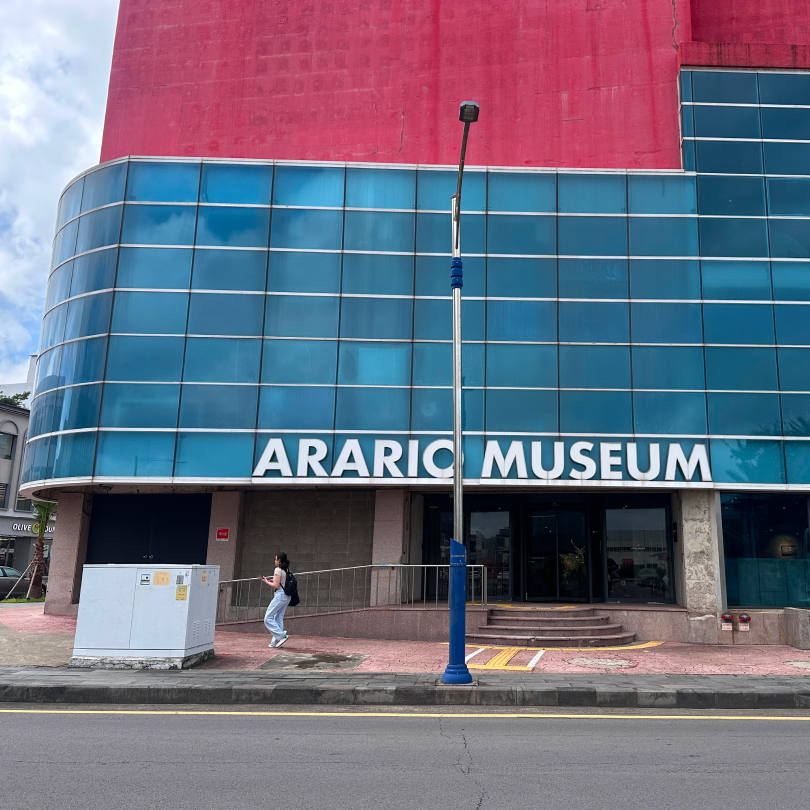
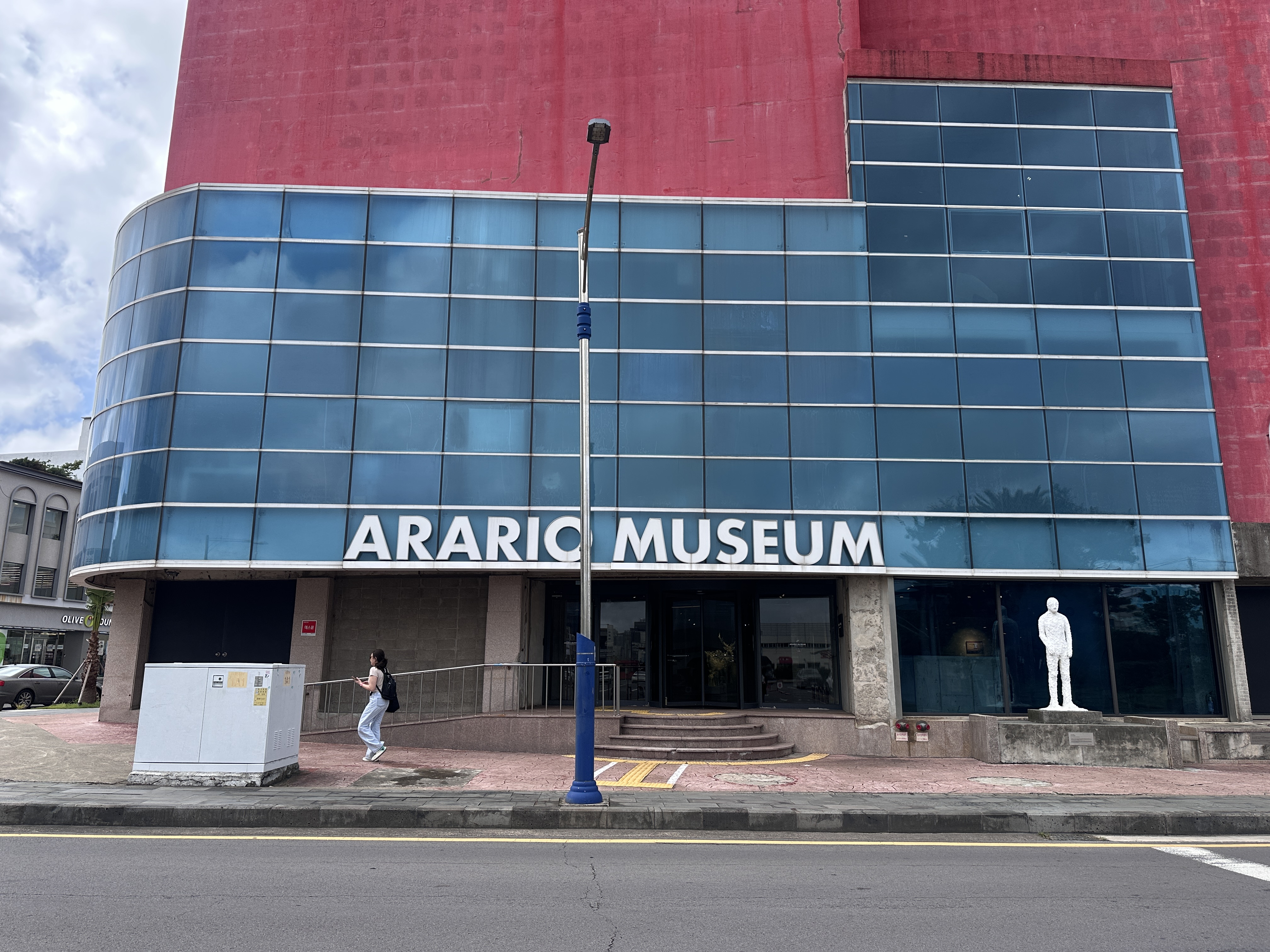
Arario Museum Jeju: A Walk Into the Red Building of Art
Arario Museum Jeju: A Walk Into the Red Building of Art
Arario Museum Jeju: A Walk Into the Red Building of Art
Where the everyday and the extraordinary, image and sculpture, intersect.
Exhibition Overview
Location: 14 Tapdong-ro, Jeju-si, Jeju Special Self-Governing Province
Hours: 10:00–19:00 (Closed on Mondays)
Contact: 064-720-8201
Just a five-minute walk from Reflow, Jeju’s co-working and workation hub, stands the unmistakable red building of Arario Museum. The visit begins on the 5th floor and moves gradually down to the lobby, each floor unfolding into a completely different world.
Just a five-minute walk from Reflow, Jeju’s workation hub, you’ll spot it immediately—the bright red building that houses Arario Museum. My visit began on the 5th floor and descended down to the lobby, with each floor opening into a completely different world.
Tickets & Tips
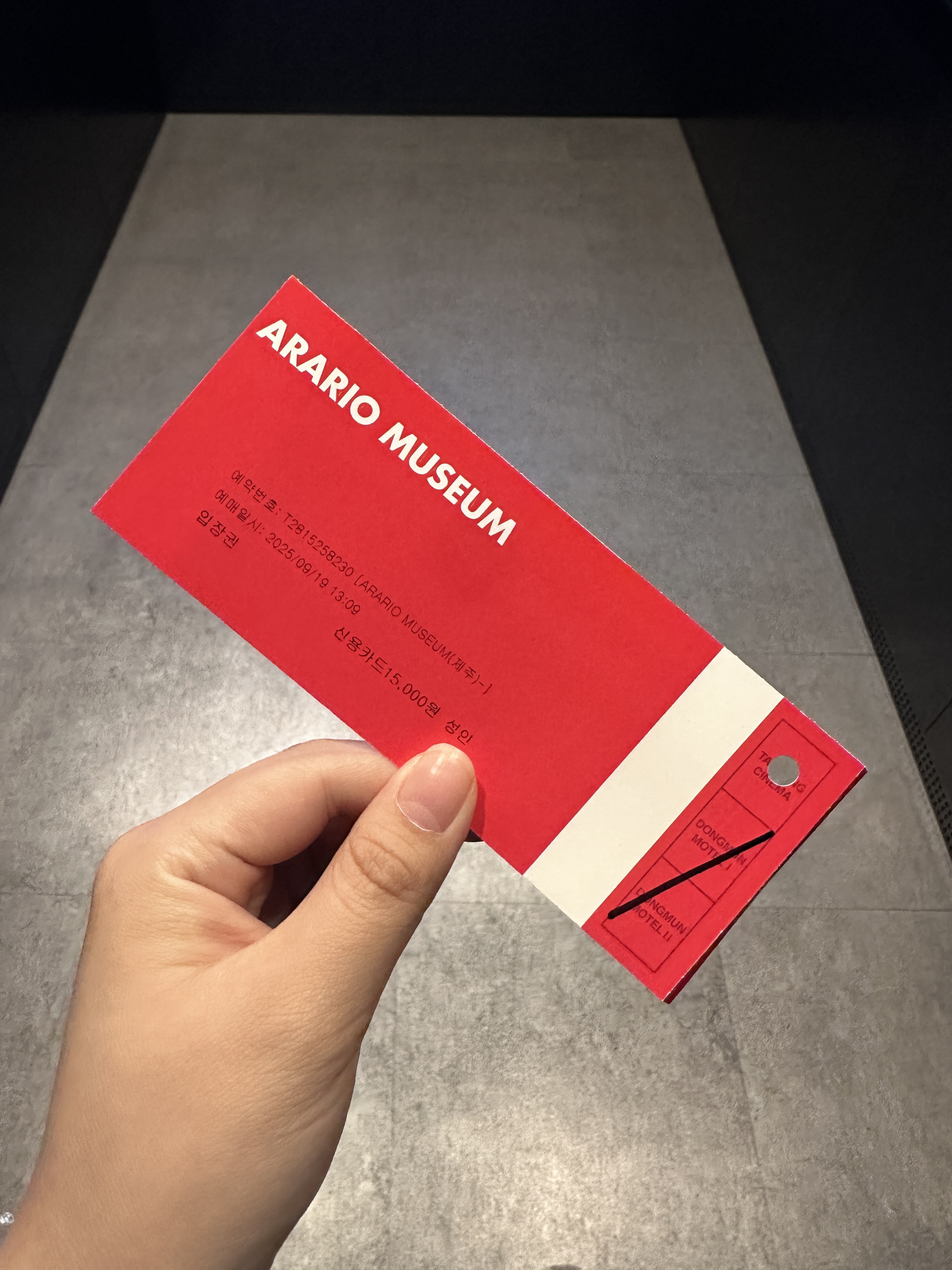
Tapdong Cinema: Adults 15,000 KRW | Youth 9,000 KRW | Children 6,000 KRW
Dongmun Motel I & II: Adults 20,000 KRW | Youth 12,000 KRW | Children 8,000 KRW
Combined Ticket: Adults 24,000 KRW | Youth 14,000 KRW | Children 9,000 KRW
- 50% discount for seniors (65+), people with disabilities, and national merit holders
- 50% discount for Jeju residents (with ID)
- 50% discount with ticket stubs (within 1 year)
- 20% discount for Genesis members (including museum shop)
- 20% M-point redemption for Hyundai Card holders
🎟️ With a standard ticket, you can return within a year at half price. If you’re planning another visit, hold on to your ticket.
Viewing Route: Start on the 5th floor and simply make your way down. The flow is natural, making the whole experience easy and immersive.
Exhibition Highlights by Floor
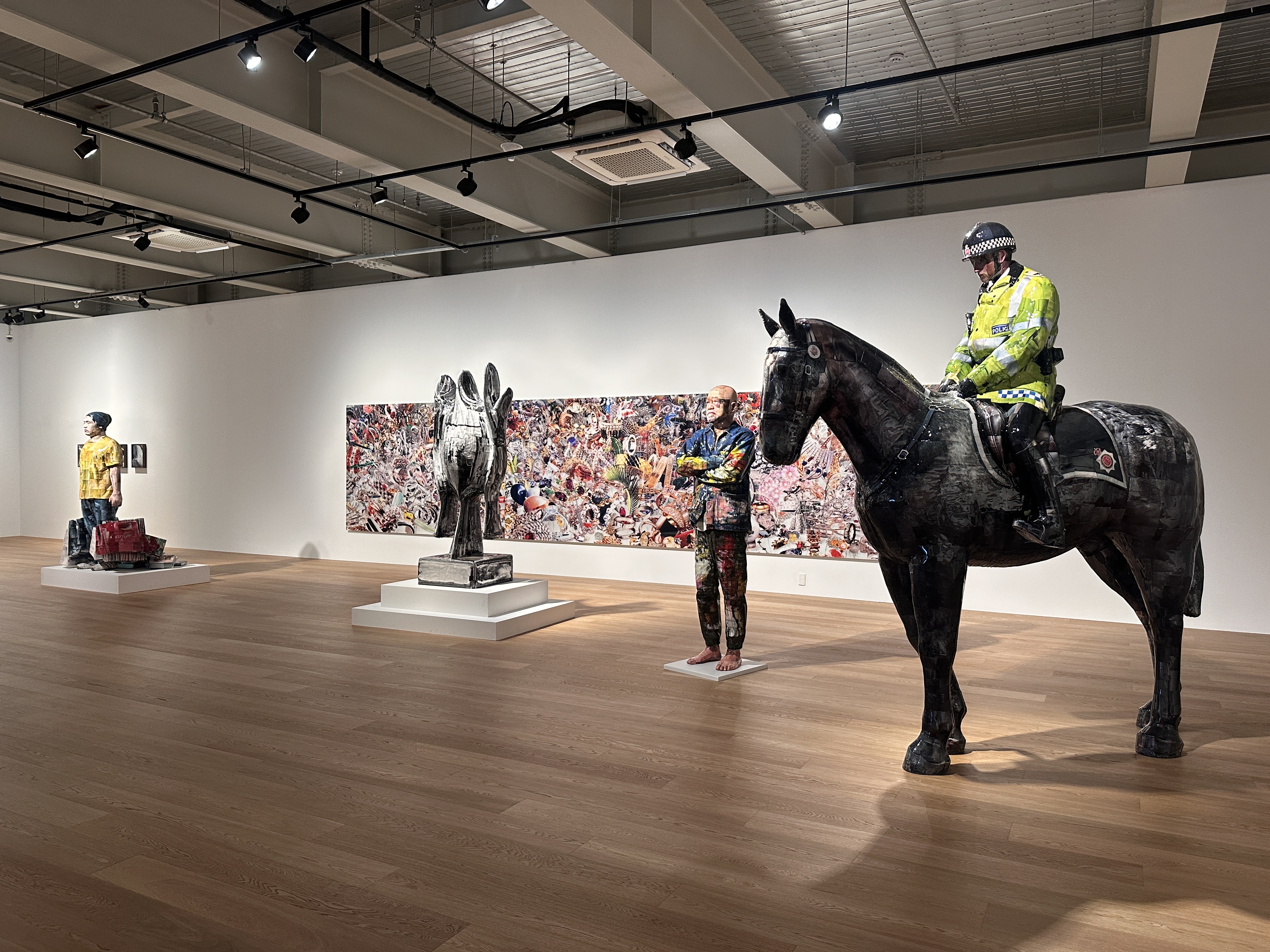
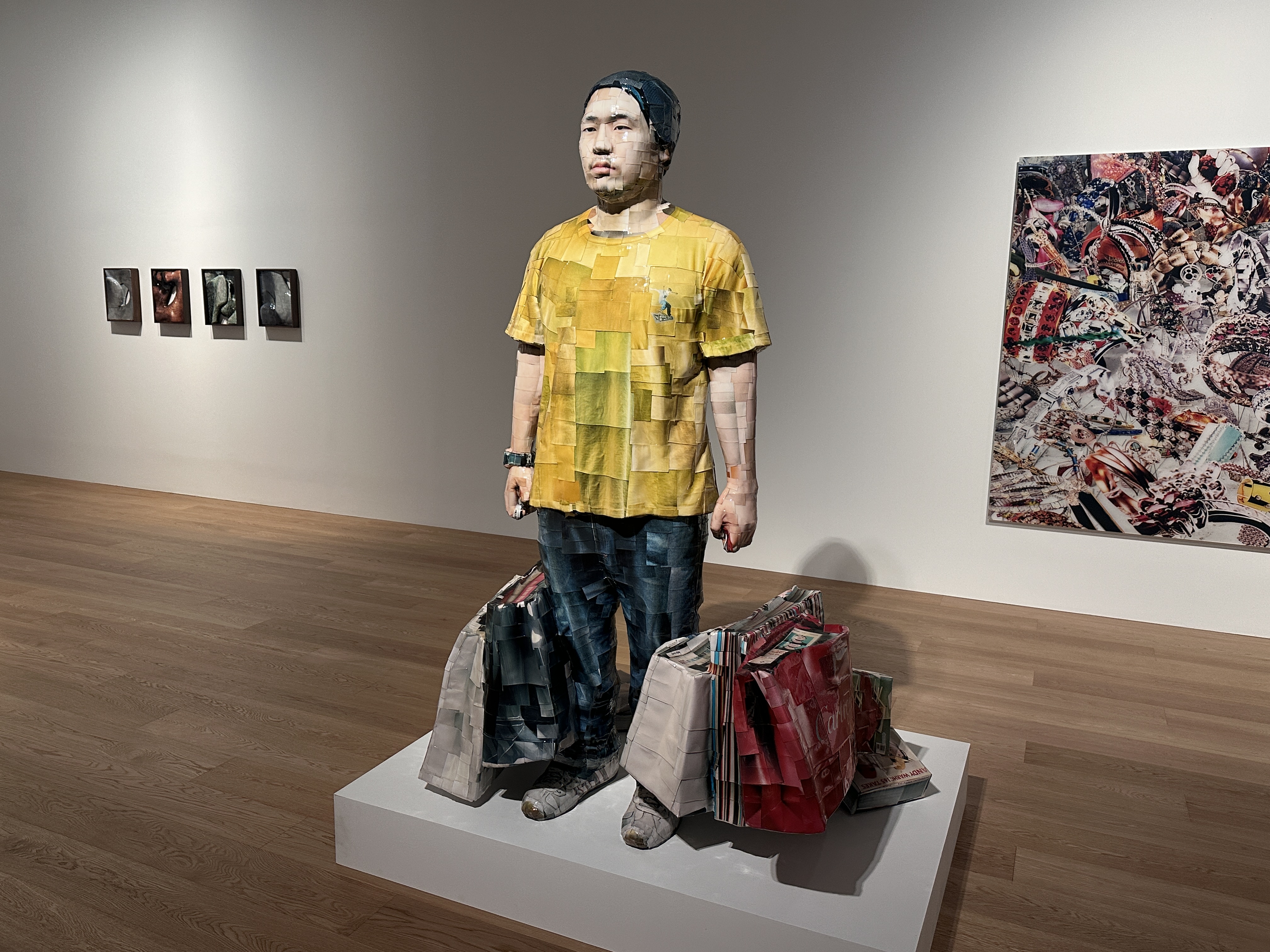
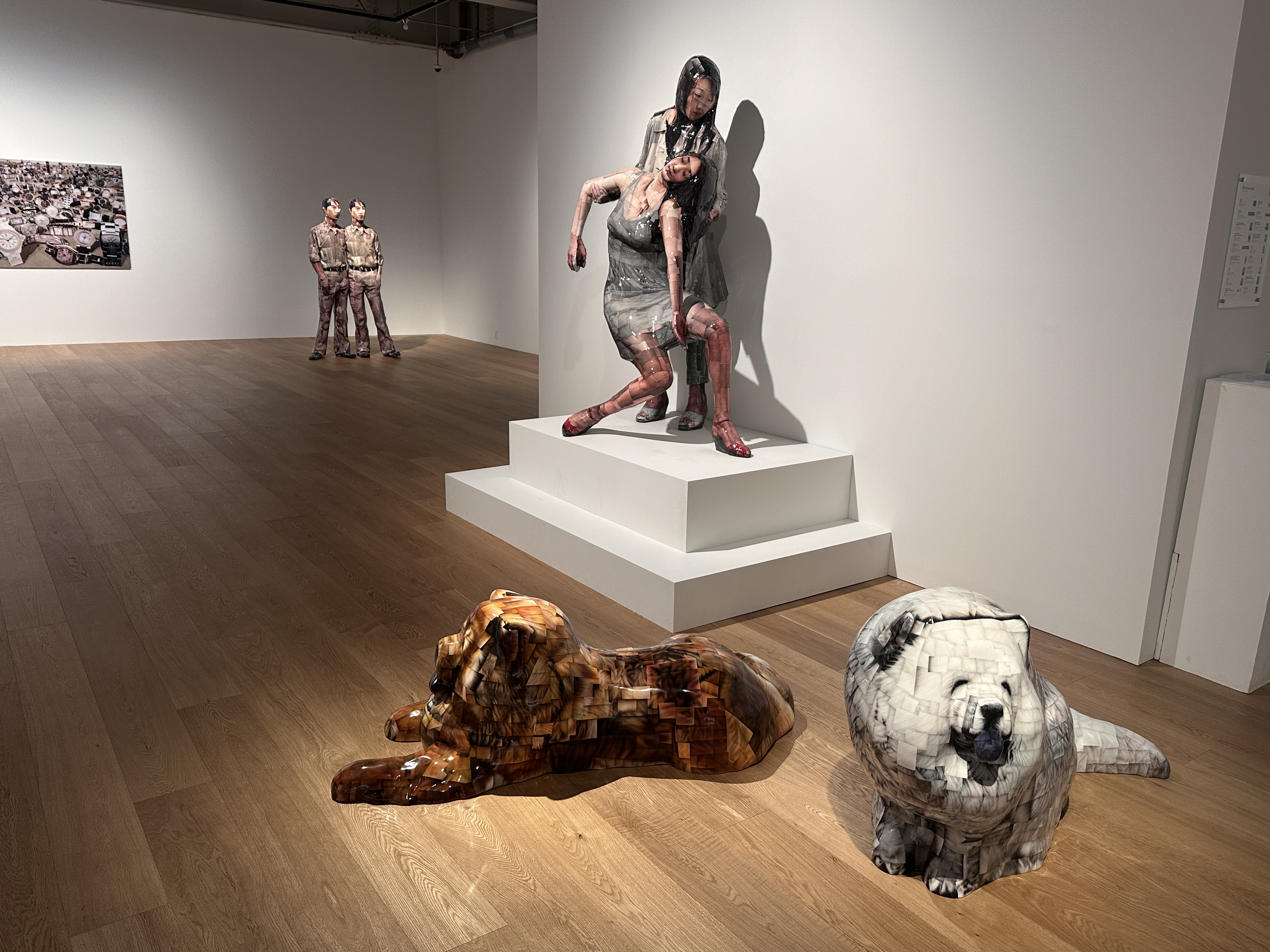
5F — Gwon Osang, A Report on Sculpture
(2024.11.12–2025.09.21)
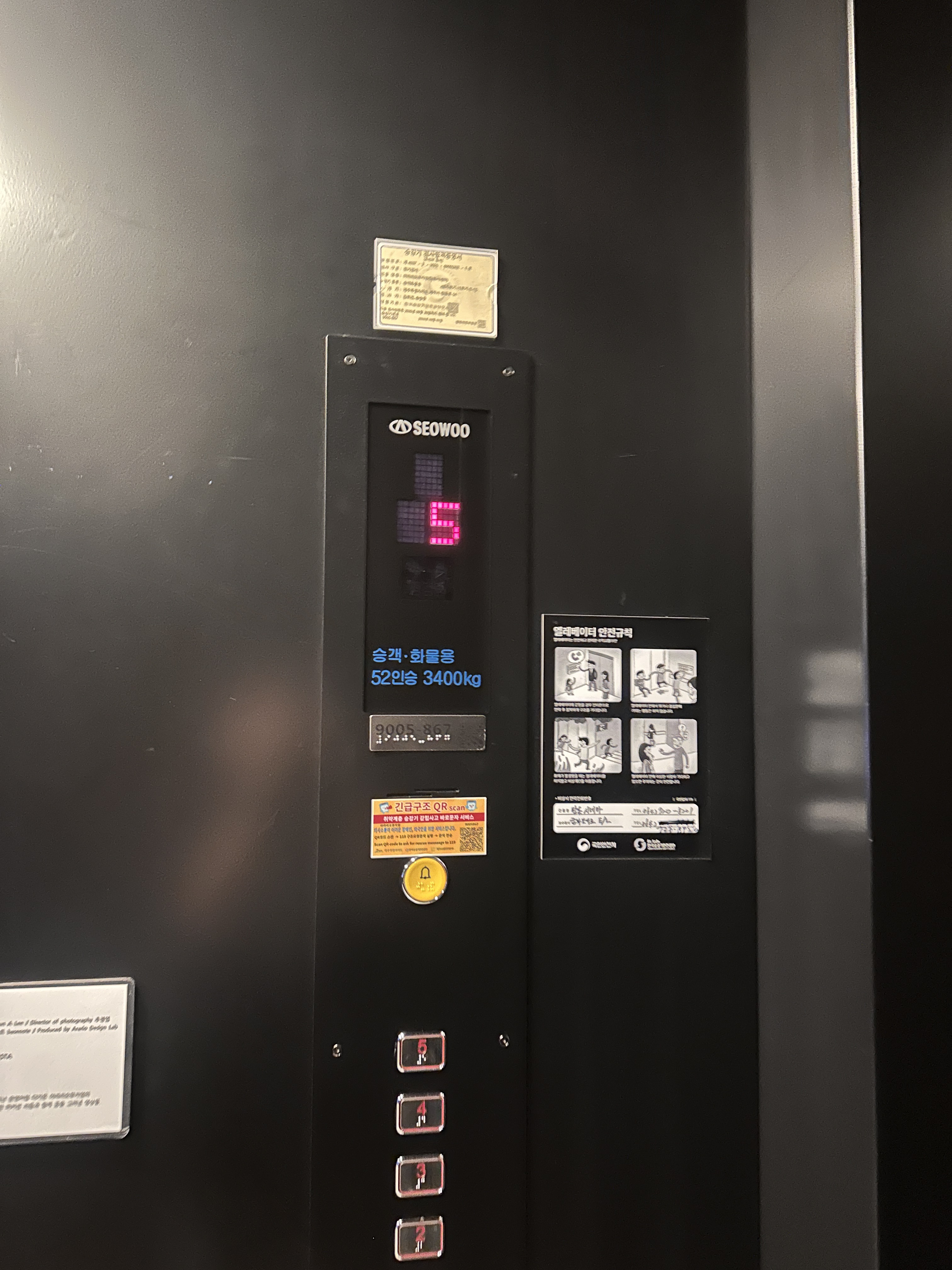
The elevator doors opened to reveal Gwon Osang’s experimental sculptures.
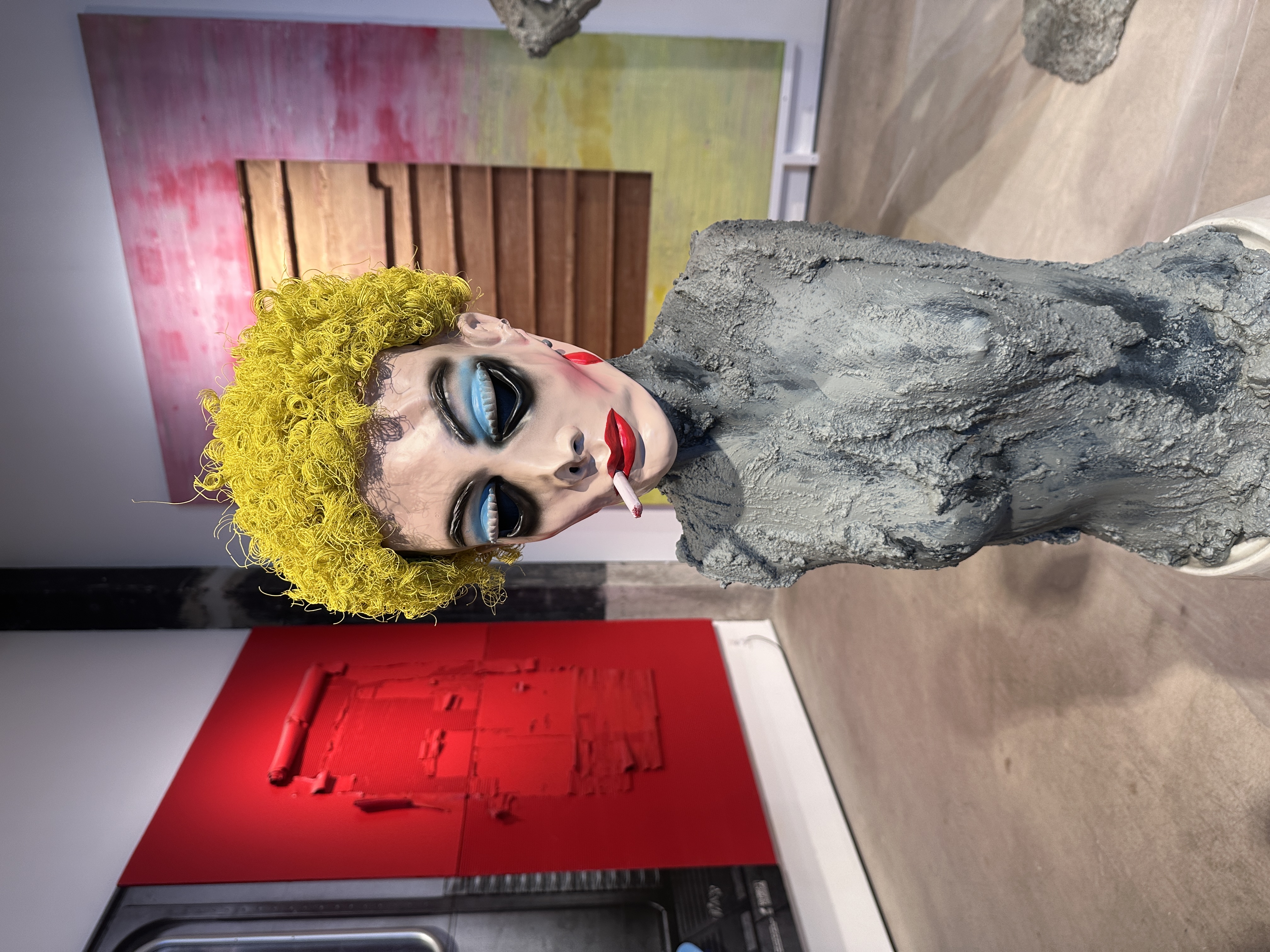
Gwon is known for merging photography and sculpture in an innovative way. Instead of traditional sculptural materials, he uses discarded objects, everyday items, and above all, photographic images cut into square pieces and layered like skin over forms. From afar, they resemble solid sculptures; up close, you realize they are entirely constructed of images.
His works go beyond visual trickery to ask the fundamental question: “What is sculpture?” By straddling the boundary between flatness and volume, reality and image, his practice invites both optical illusion and critical reflection.
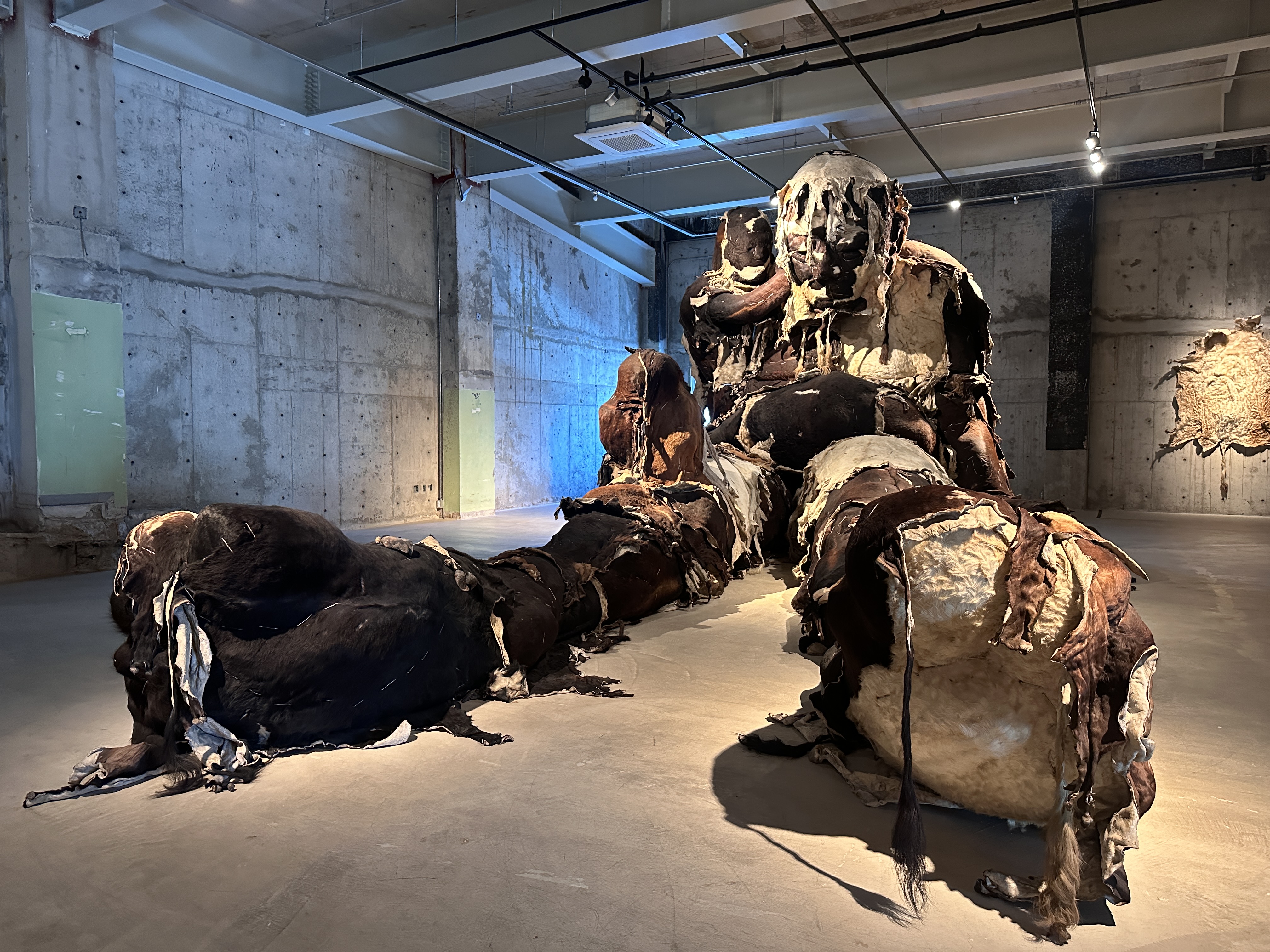
4F — Zhang Huan, César Baldaccini, Nam June Paik
Zhang Huan, Hero No.2: A massive humanoid figure made of cowhide. The front desk even warned visitors not to walk between its legs due to its sheer presence. Born in 1965, Zhang is a leading figure of Chinese contemporary art, known for extreme performances and monumental installations.
Hero No.2 evokes both the nostalgia of his rural childhood and broader social and religious themes. His Family Tree photo series, in which ancestral names are layered across his face until it is obscured, exemplifies his fusion of personal memory, pain, and collective history.
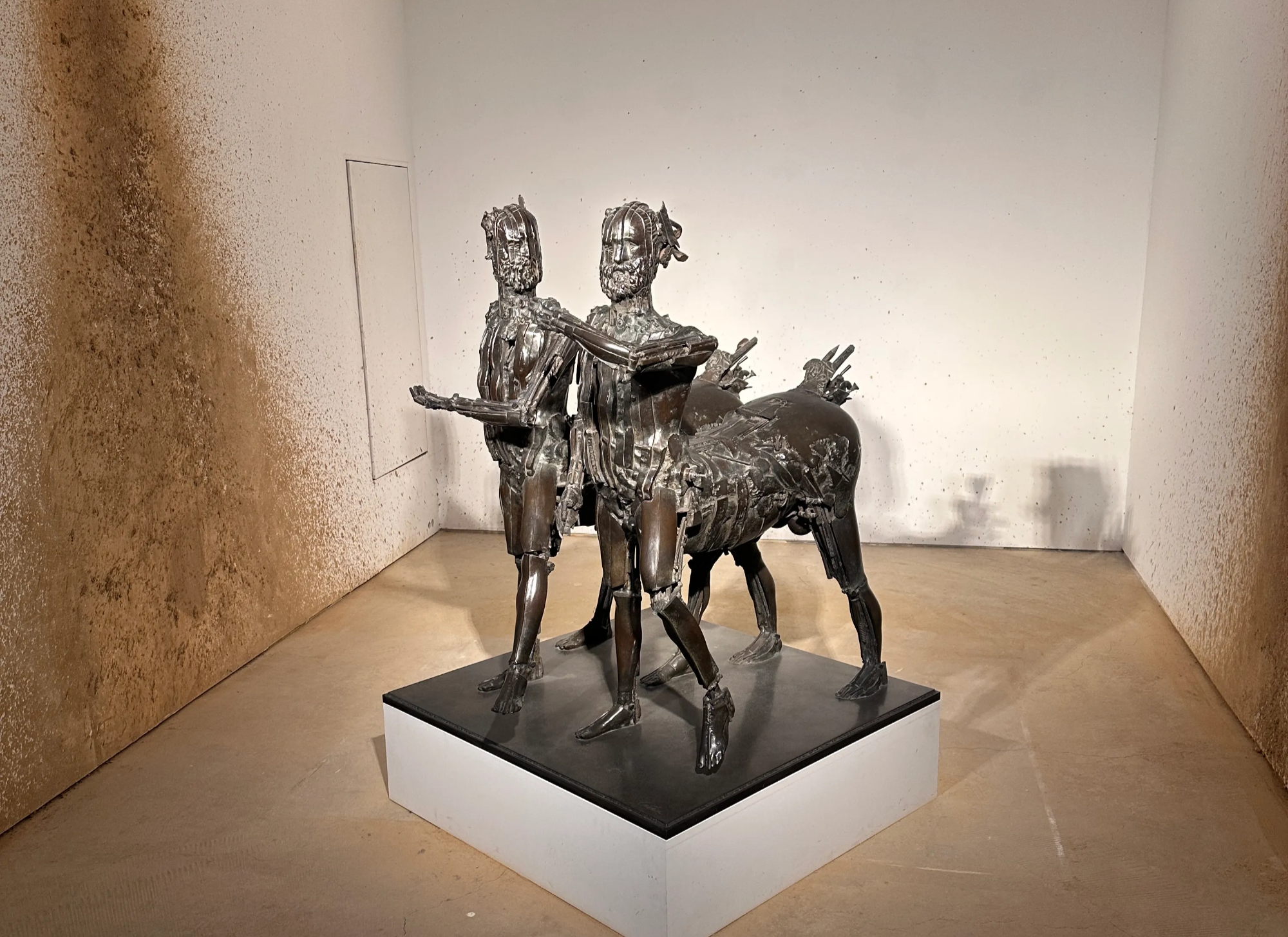
César Baldaccini, Les Centaures Jumeaux (1995): César, dubbed the “magician of welding,” assembled scrap metal and mechanical parts into human-animal hybrids. His work captures the moment when industrial debris is reborn as art, infused with humor and raw energy.
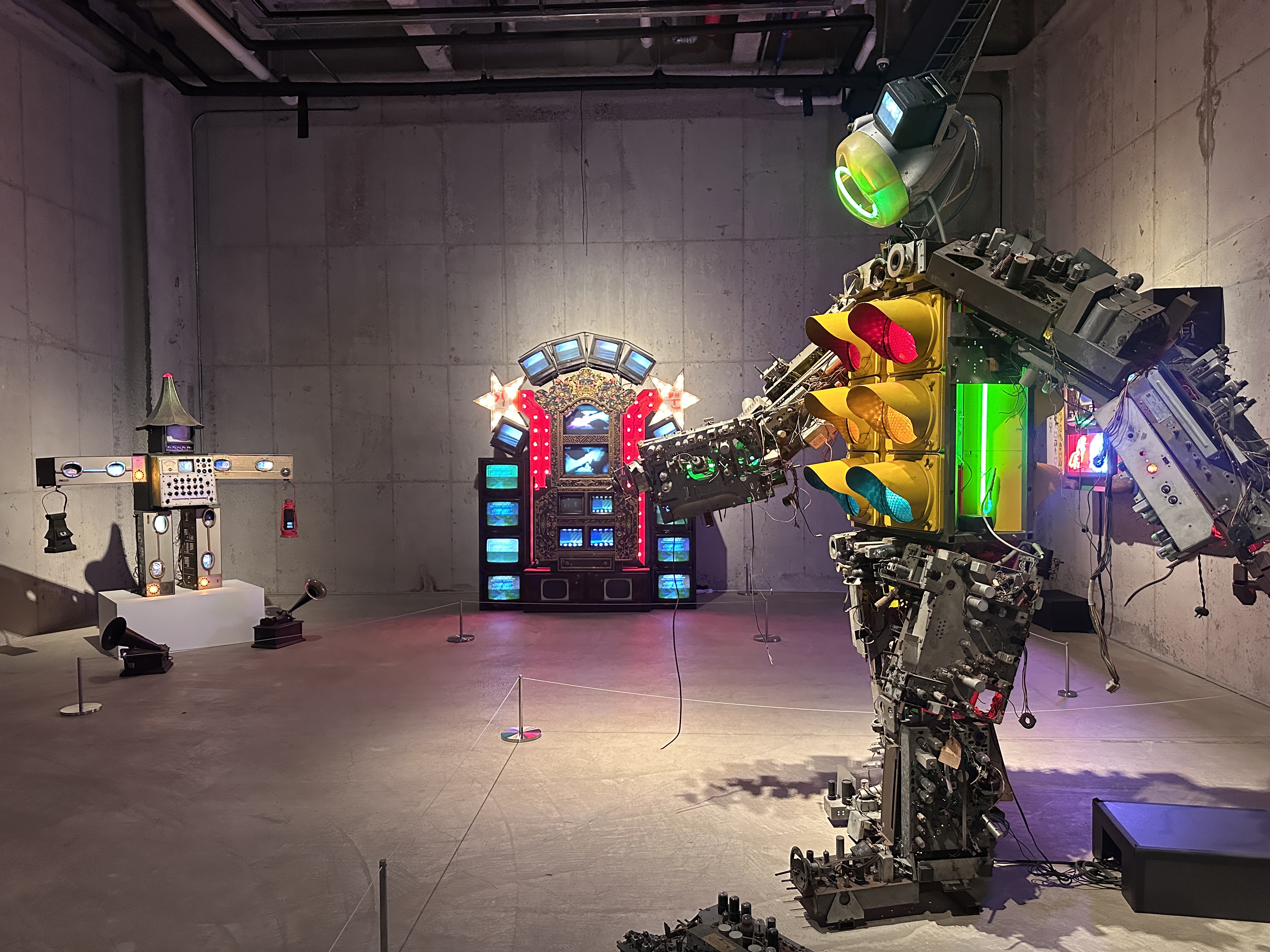
Paik Namjune: The father of video art. Paik reimagined television as more than a broadcast tool—it became a sculptural medium. His robot sculptures, made of stacked TV monitors, embody historical figures, intertwining sound, moving image, machine, and humanity into groundbreaking new forms.
3F — Thomas Houseago, Kim Kyungseung, Markus Lüpertz, Anselm Kiefer, CI Kim
The third floor felt like the exhibition’s anchor, dense with heavy-hitting works.
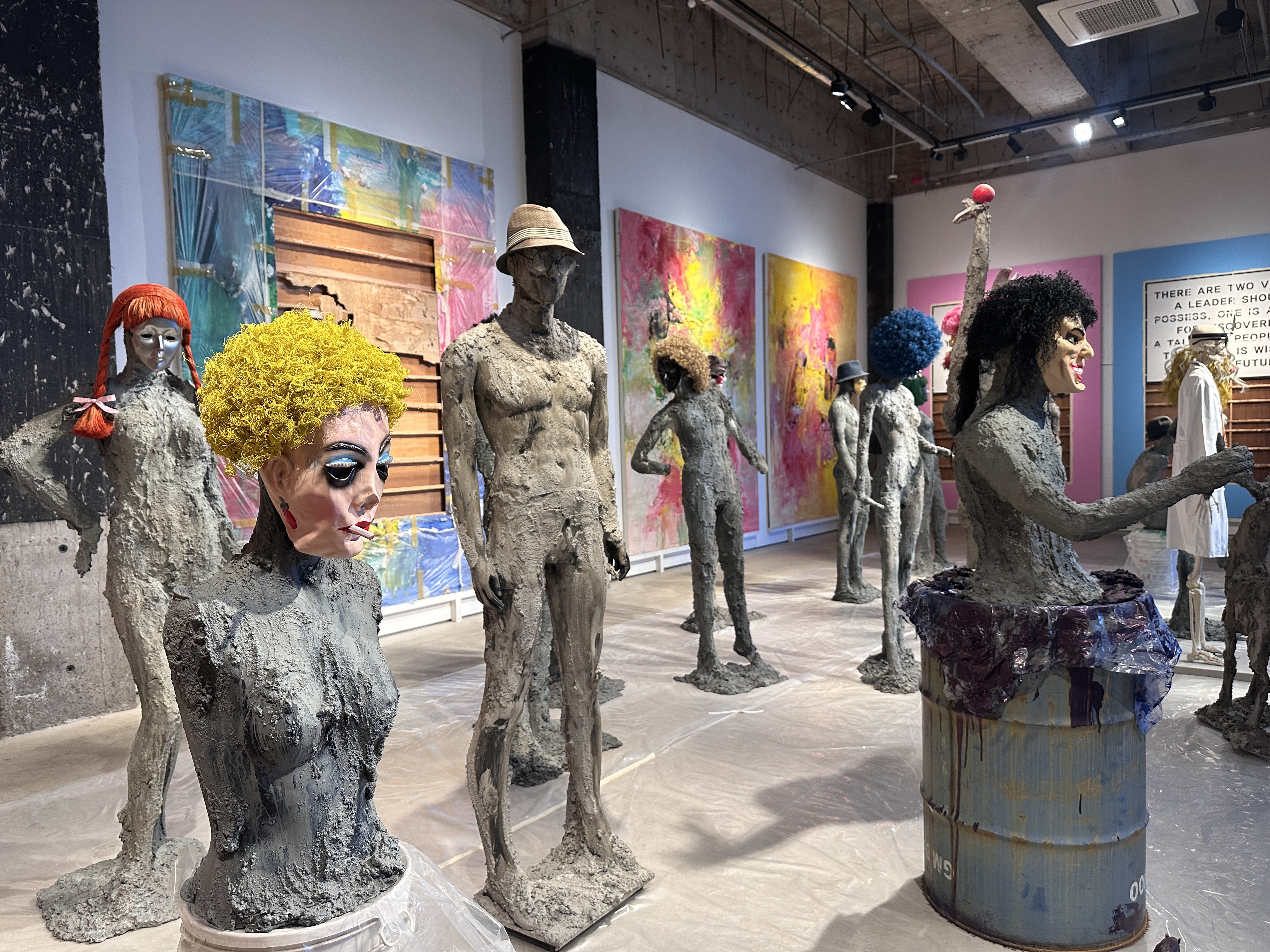
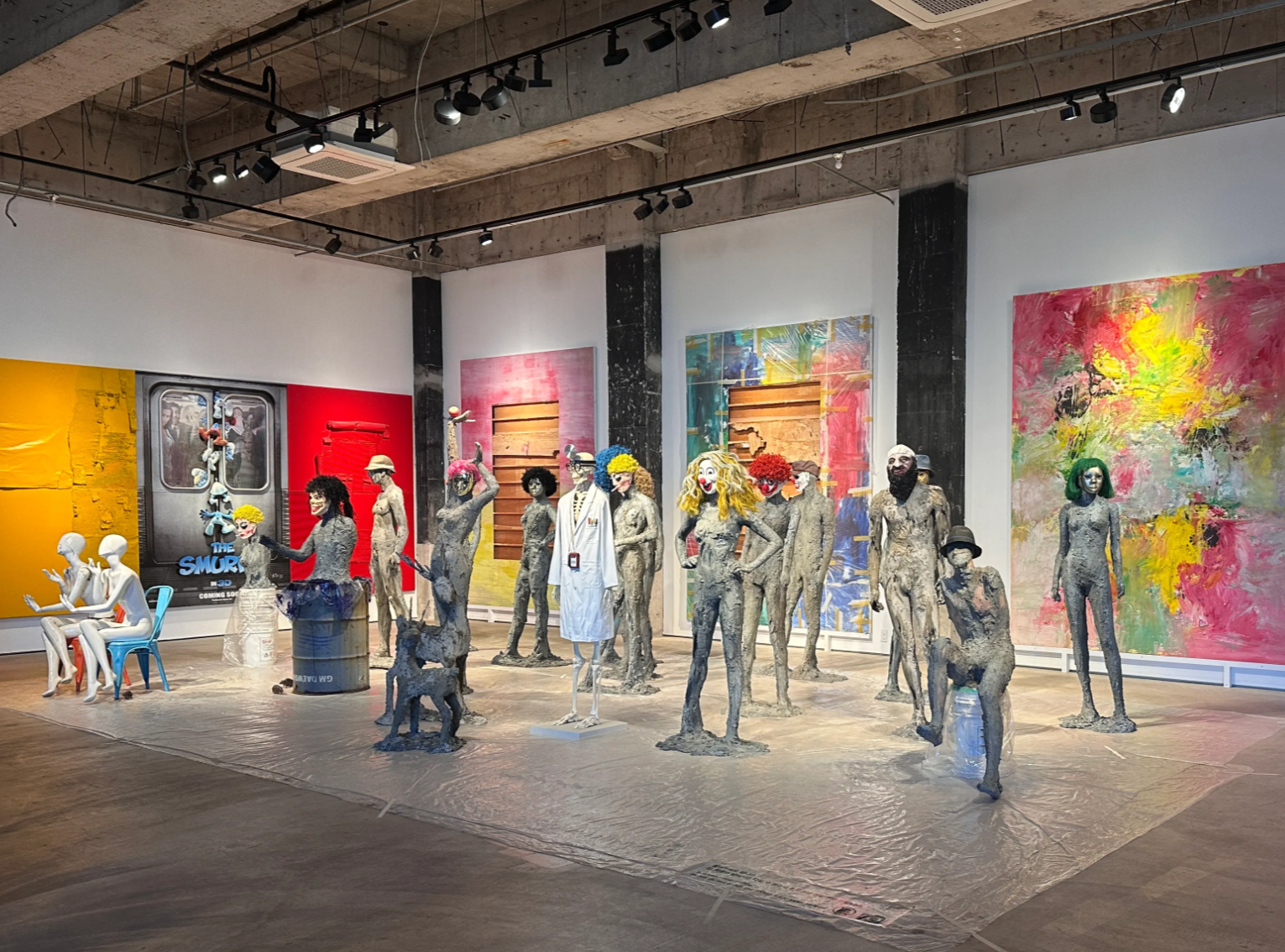
CI Kim, Untitled: Using discarded materials salvaged from Jeju’s seas, CI Kim creates hybrid works of painting, sculpture, photography, and installation. His practice brings out the temporality and traces of everyday objects, transforming them into entirely new visual worlds. Monumental works combining cement, bronze, and found objects become symbolic stages linking nature and humanity, past and present.
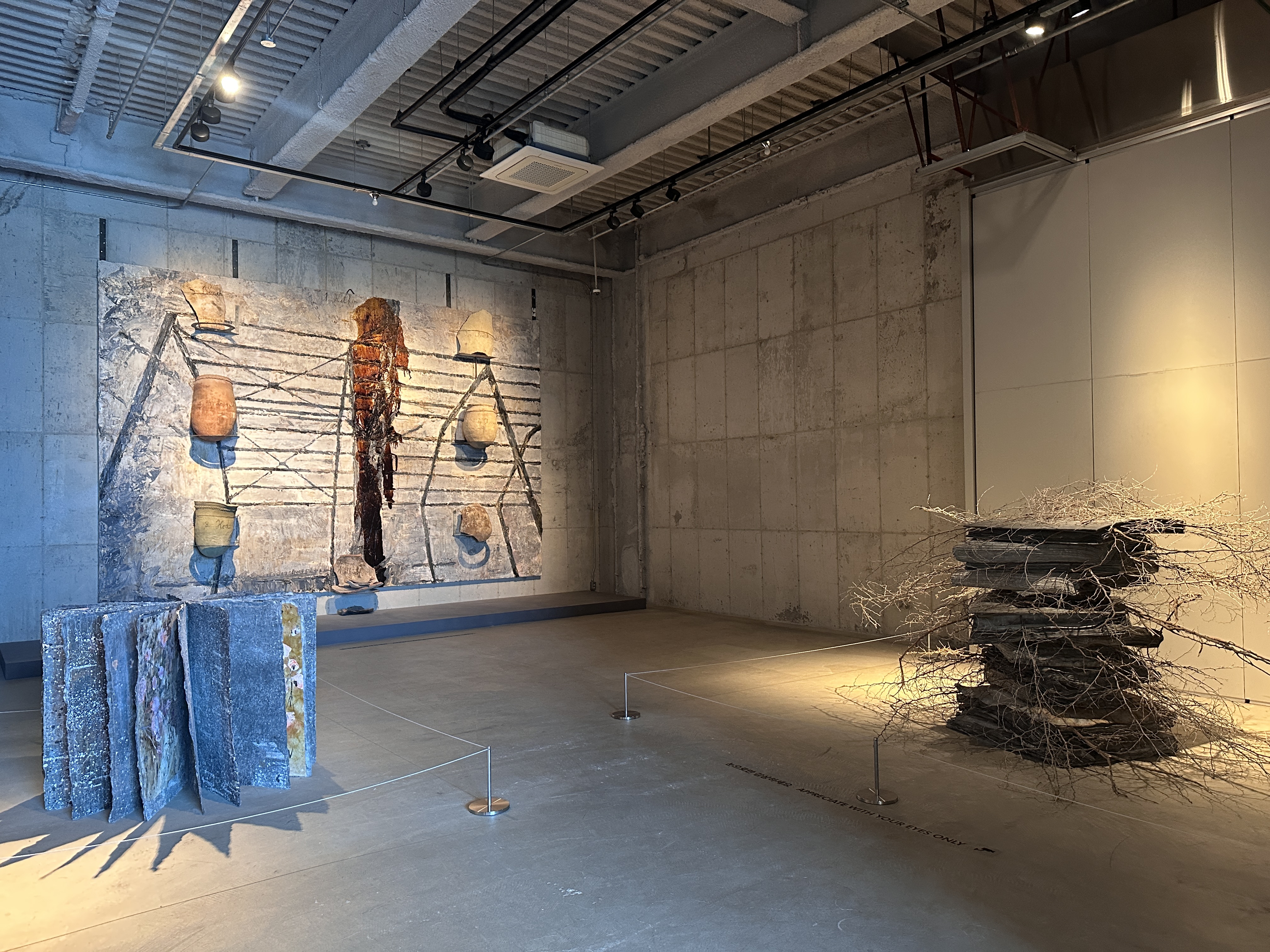
Anselm Kiefer, Star Books / Big Bang / Tannhäuser: Kiefer, one of Germany’s foremost postwar artists, uses lead, glass, earth, and wood to confront the scars of modern German history—particularly war and the Holocaust. His works weave together myth, religion, history, and literature into visual epics that meditate on memory, trauma, and the human condition.
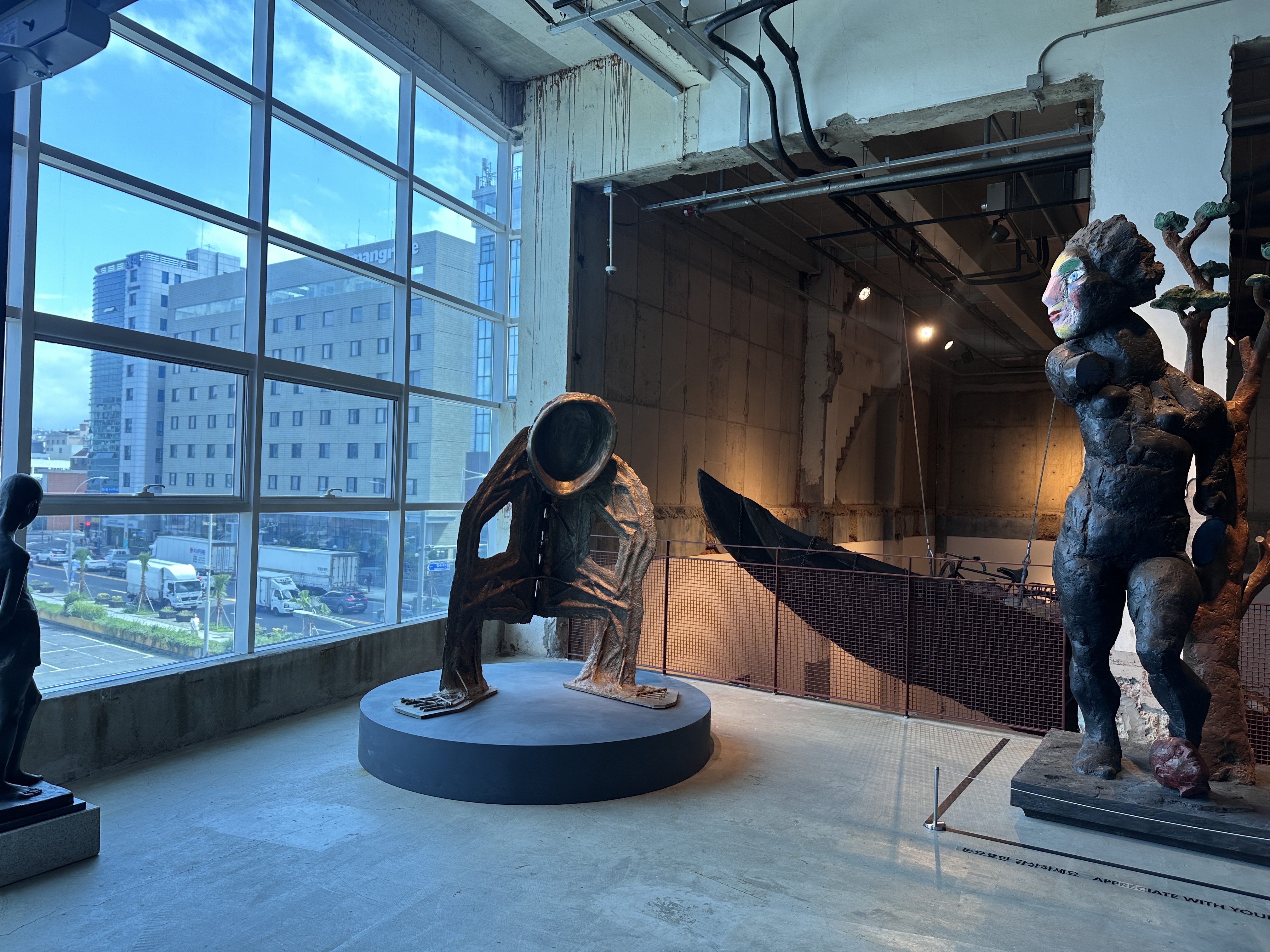
Thomas Houseago, Moon Form, Markus Lüpertz, Prometheus: Mythological references reinterpreted as fractured, contemporary sculptural forms.
This floor fused myth, history, and collective memory.
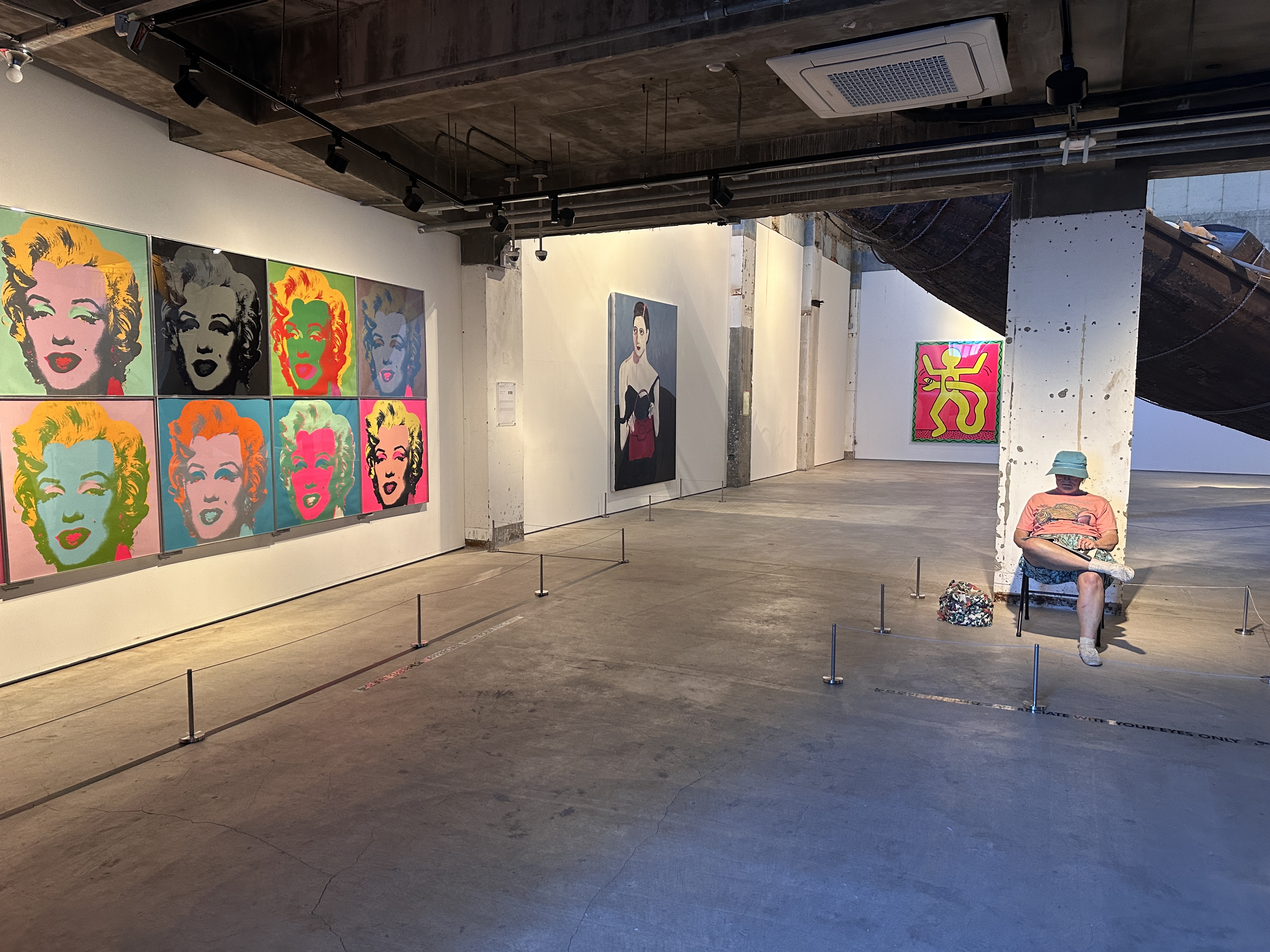
2F — Andy Warhol, Chantal Joffe, Hans Op de Beeck, Kim Inbai
Andy Warhol, Marilyn Monroe: The pop art icon at his most iconic. Warhol multiplied Monroe’s image through silkscreen printing, turning celebrity into a metaphor for mass production and consumer culture.
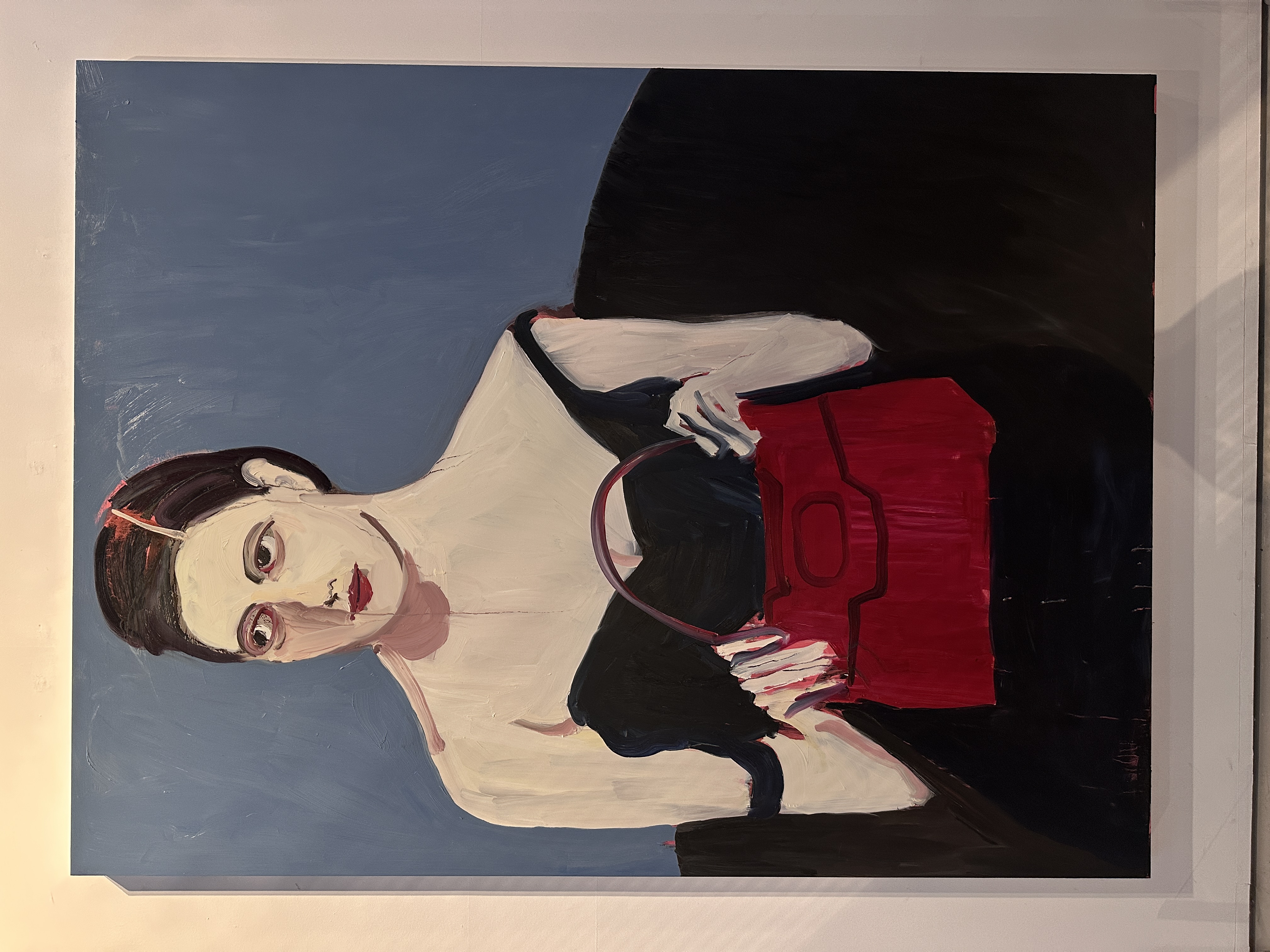
Chantal Joffe, Isabella: A portrait whose brushstrokes lay bare the subject’s emotions with striking realism. Standing before it, you feel an almost magnetic pull—so compelling it’s hard to look away.
Joffe’s figures often carry the gaze of mass media, like something out of a magazine or photograph, yet at the same time radiate a tension that feels both familiar and strangely distant. The exposed female body in her work is not mere nudity, but a way of probing identity and selfhood in the modern portrait.
Her practice can be seen as an experiment where photographic realism meets painterly distortion, creating portraits that navigate between inner life and the societal gaze.
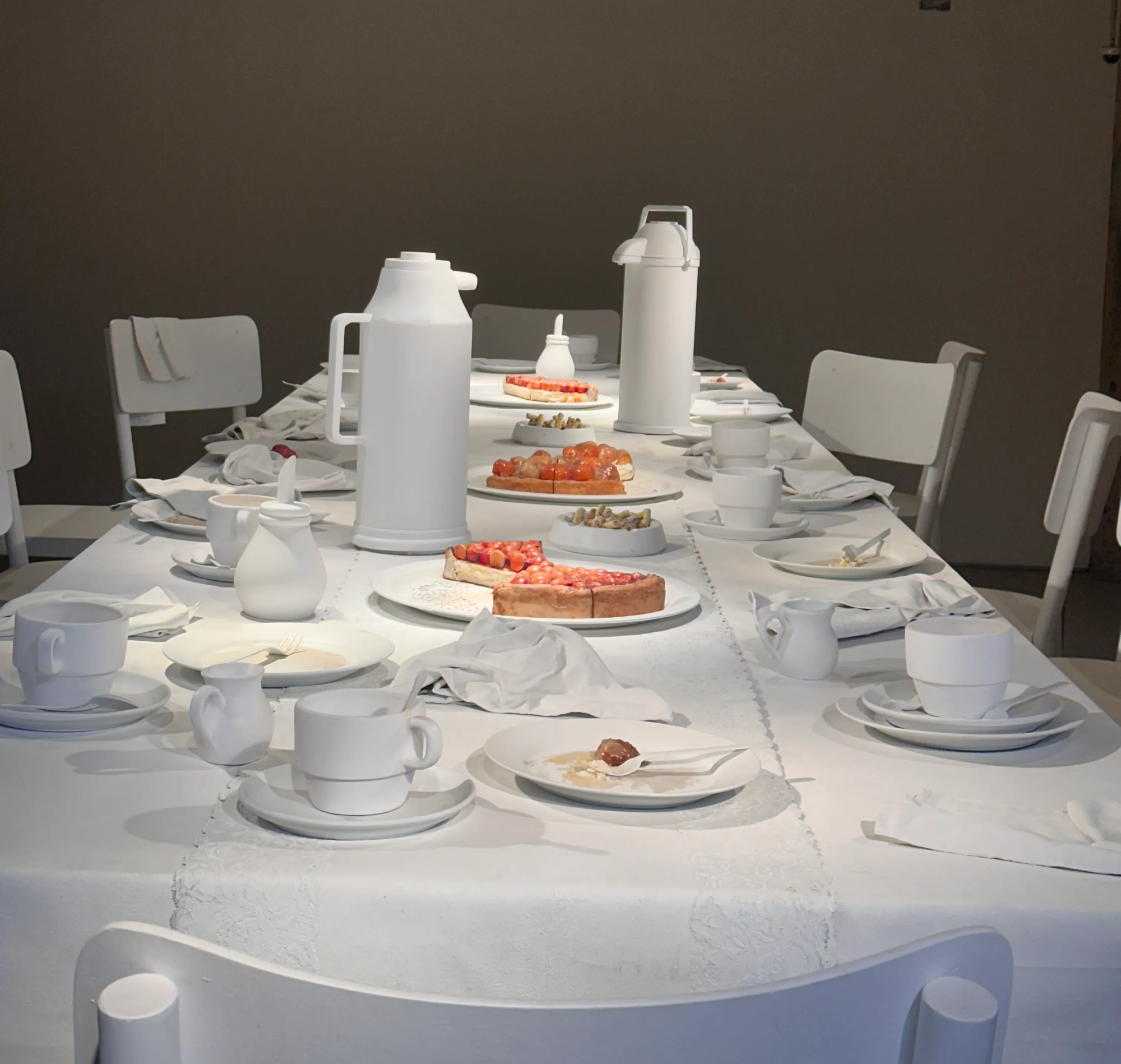
Hans Op de Beeck, Table: A white dining table set at a child’s eye level. Its reduced scale and monochrome palette stirred memories of childhood.
Created in 2006, Table meticulously depicts traces of life—leftover food, cigarette butts, coffee cups—only to paint the entire scene in white. The result is a work that feels like stepping into a forgotten dream or a frozen memory suspended in time.
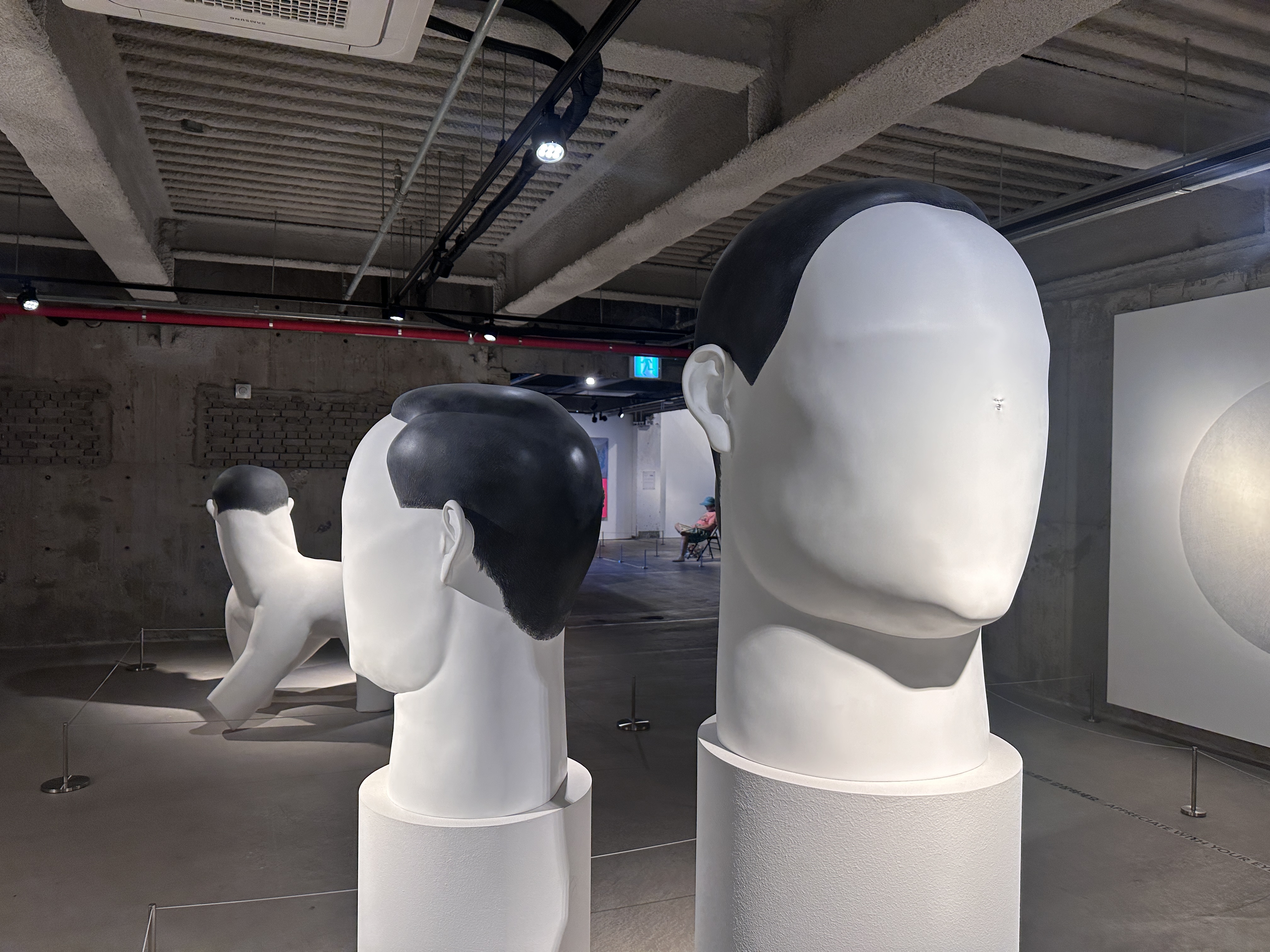
Kim Inbai, Giridison Bambini / Deller Hon Dainy: Childlike yet distorted human forms that oscillate between charm and eeriness. His simplified bodies force us to reconsider the essence and boundaries of human form itself.
This floor felt like a stage where realistic faces, childhood memories, and sculptural imagination came together.
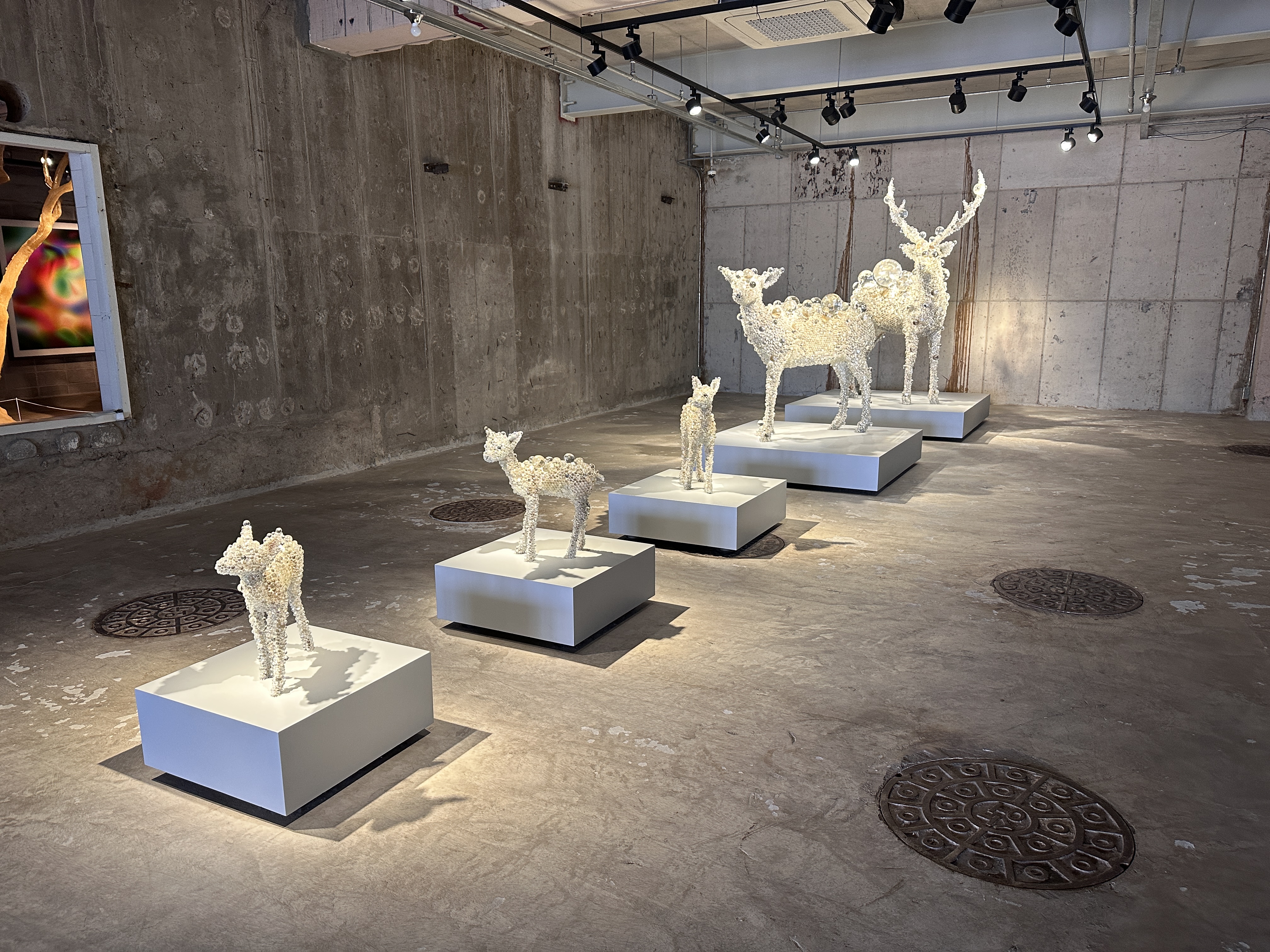
1F/Lobby — Kohei Nawa, Damien Hirst
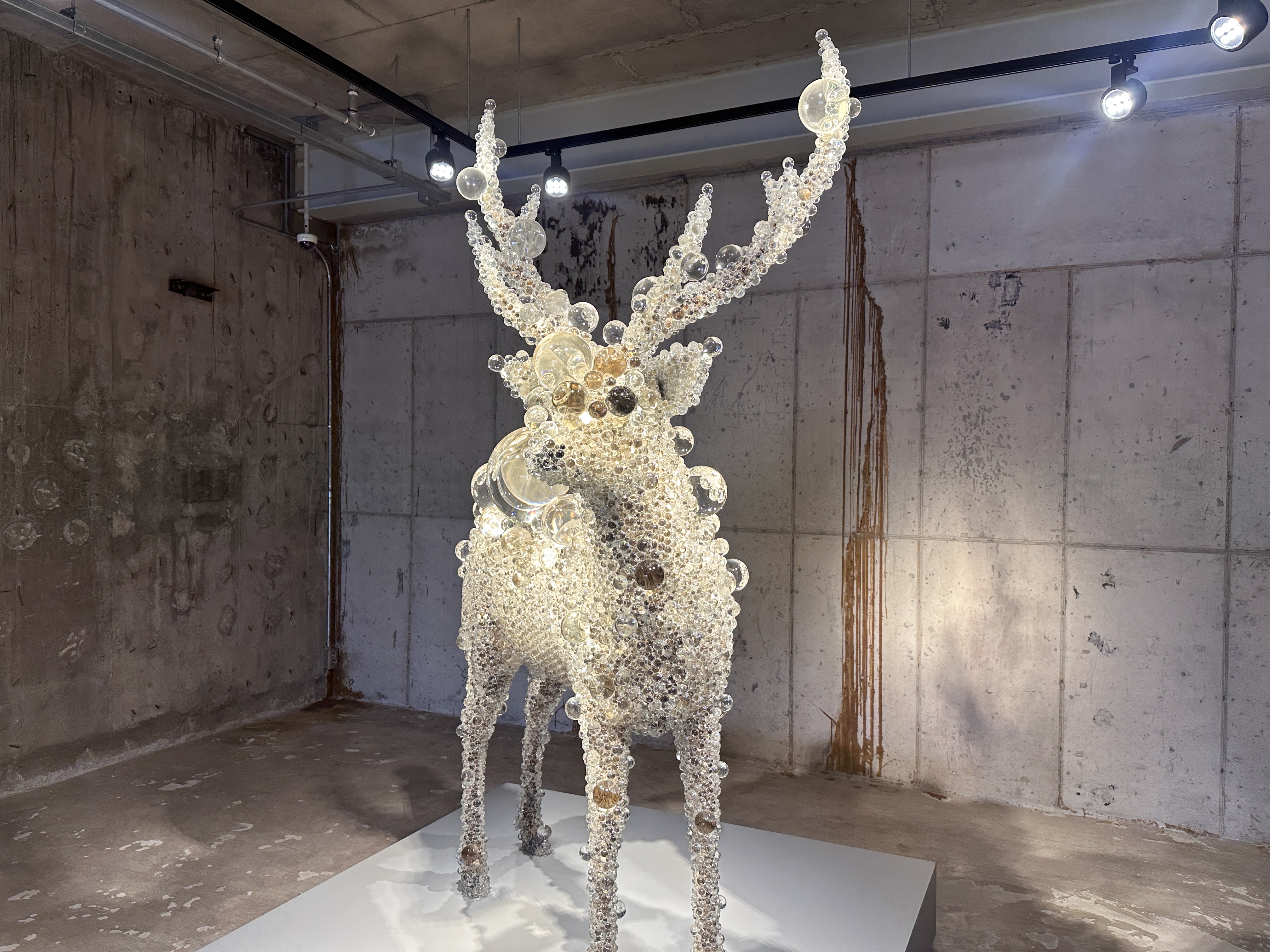
Kohei Nawa, PixCell-Deer: A taxidermy deer encrusted with countless glass beads. Its body dissolves into something pixelated, asking whether we ever see objects directly or only through mediated images. His work explores the uncertain boundary between perception and reality.
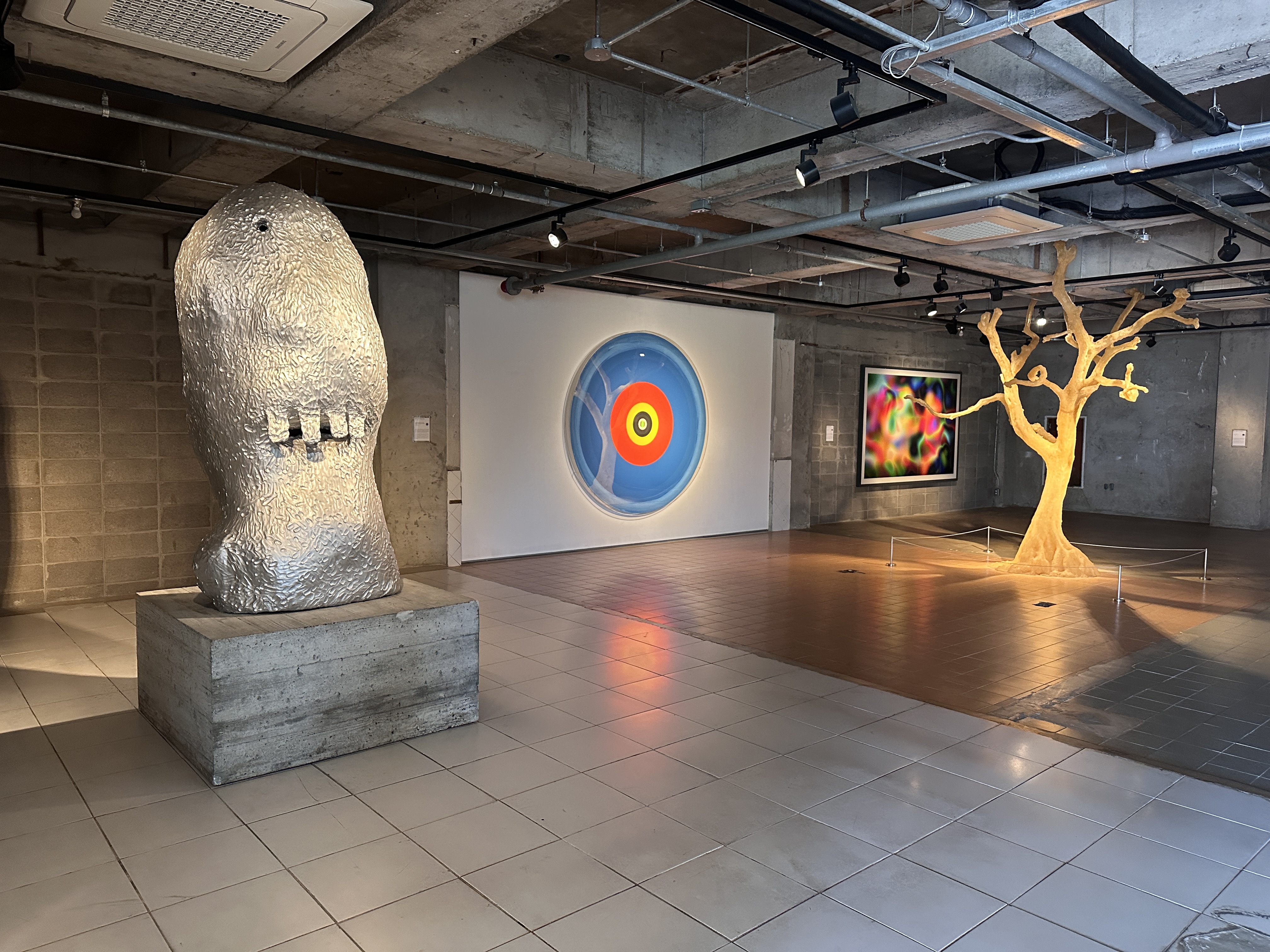
Damien Hirst: Concentric circles in bold primary colors dominate the lobby, ensuring the exhibition ends with an impact rather than emptiness—like a final cinematic scene.
Lingering Impressions
Arario Museum leaves you with questions that linger long after the visit.
Between image and matter, memory and forgetting, reality and imagination, it asks us to reconsider the meaning of art itself.
From Viewing to Owning
As you walk through spaces like Arario Museum, a thought naturally emerges: “Can we move beyond appreciating art to actually owning a part of it?” This is the mission of YEATU—a platform connecting art and finance.
- We analyze an artwork’s scarcity, market demand, cultural significance, and investment structure.
- With transparent issuance and settlement, investors share not only in principal but also in returns, alongside the art itself.
Art Becomes Finance, only YEATU
Transform the way you engage with art—from seeing to owning.