investment-news
When Markets Hit the Emergency Brake: Why Investors Are Looking Beyond Traditional Assets

When Markets Hit the Emergency Brake: Why Investors Are Looking Beyond Traditional Assets
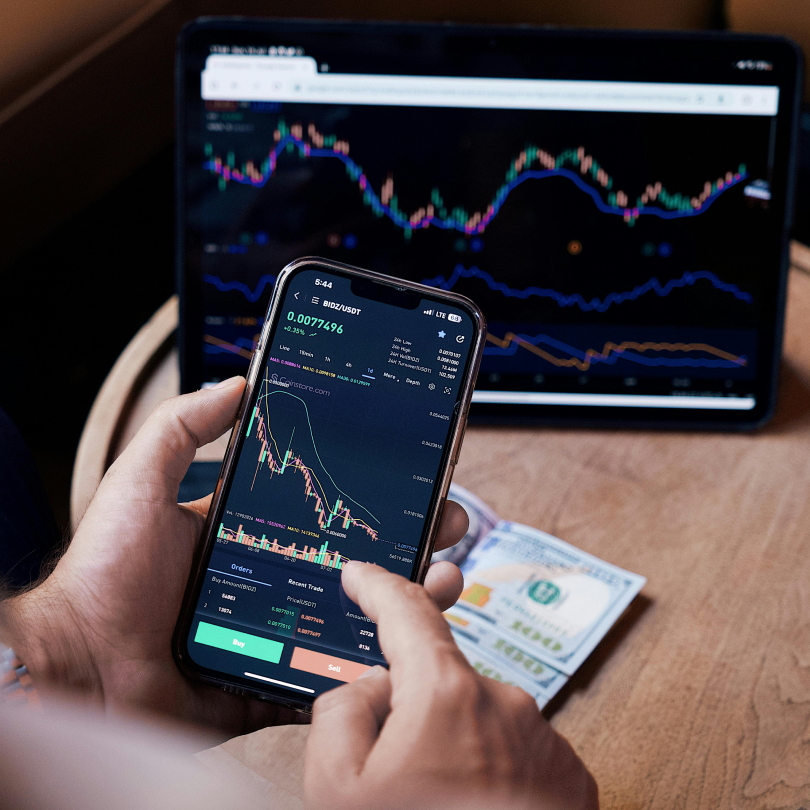
Today, the Korean stock market experienced another moment of uncertainty.
The Korea Composite Stock Price Index (KOSPI) faced a sharp decline as investors reacted to concerns around technology and semiconductor valuations. The selloff was largely driven by pressure on major technology companies, reminding investors how quickly market sentiment can shift.
When markets fall too fast, traditional financial systems have a safety mechanism:
A circuit breaker.
A circuit breaker temporarily pauses trading when markets experience extreme volatility. The goal is simple: slow down panic, give investors time to reassess, and prevent emotional selling from creating a deeper crash.
In Korea, circuit breakers are triggered when market movements reach certain thresholds, temporarily stopping trading before reopening.
It is the financial world’s version of saying:
“Everyone stop for a moment. Let’s think before we react.”
Because sometimes, even billion-dollar markets need a timeout.

But here is an interesting question:
Why don’t cultural IP markets have circuit breakers?
Unlike stocks, cultural IP does not move through one centralized exchange where prices update every second. A song, an artwork, a film, or a creative project is not valued only by daily market sentiment.
Its value is built through cultural influence, audience connection, creator reputation, long-term demand and intellectual property growth
There is no single market screen flashing red because thousands of people decided to sell at the same time. Traditional financial assets can react instantly to interest rates, earnings reports, or global market fear. Cultural assets work differently.
Their value is often created over time. A market index can fall within hours. A story, artwork, or cultural movement can continue growing for years.
A Different Way to Think About Investment
Market volatility reminds investors why diversification matters.
For decades, investors have built portfolios around stocks, bonds, and real estate. But as the world changes, alternative assets are becoming a bigger part of the conversation.
Art and cultural IP represent a different type of value. They are not just financial products. They are ideas, creativity, communities, and stories that people continue to connect with. This does not mean cultural assets have no risk. Every investment carries risk.
But it means their value is influenced by different factors compared to traditional markets.
From K-Culture to Cultural Finance
Korean cultural IP has become one of the world’s fastest-growing soft power movements.

From music and films to exhibitions, characters, and creators, culture is no longer viewed only as entertainment. It is becoming an asset ecosystem. But many creators still face the same challenge:
How can cultural value become sustainable financial value?
That is where YEATU comes in. YEATU is building a platform where culture and finance meet by connecting creators, cultural assets, and investors.
We believe the future of investing is not only about owning shares in companies. It can also be about supporting the ideas, artists, and stories shaping the next generation.
Because while markets may need circuit breakers, creativity does not stop. Explore a new way to experience cultural investment with YEATU.
Sign up today and receive 5,000 KRW in reward points.
Enter referral code EPPQ3618 and receive an additional 2,000 KRW bonus.
Discover the future of cultural finance at YEATU.