investment-news
Why Is the Future of Money Being Discussed in Amsterdam?
Why Is the Future of Money Being Discussed in Amsterdam?
Why YEATU Is Watching Money20/20 Europe 2026 Closely
Bank CEOs. Global card executives. Fintech startup founders. AI companies. Policy makers. Crypto firms.
When this many people gather in one place, two things usually happen.
First, everyone starts talking about “the future.”
Second, people quietly start doing business.
And right at the center of that is .
Money20/20 is considered one of the most influential events in the global fintech industry.
According to the organizers, the event is: “The world’s leading premium content, sales, and networking platform for the global money ecosystem.”
In simpler terms, this is not just another expo filled with booths, branded coffee cups, and sleep-deprived founders trying to survive on networking and caffeine. It’s where people seriously ask:
“How will money move in the future?”
And increasingly, the answer is becoming far more complicated than banks alone.
What Exactly Is Money20/20?
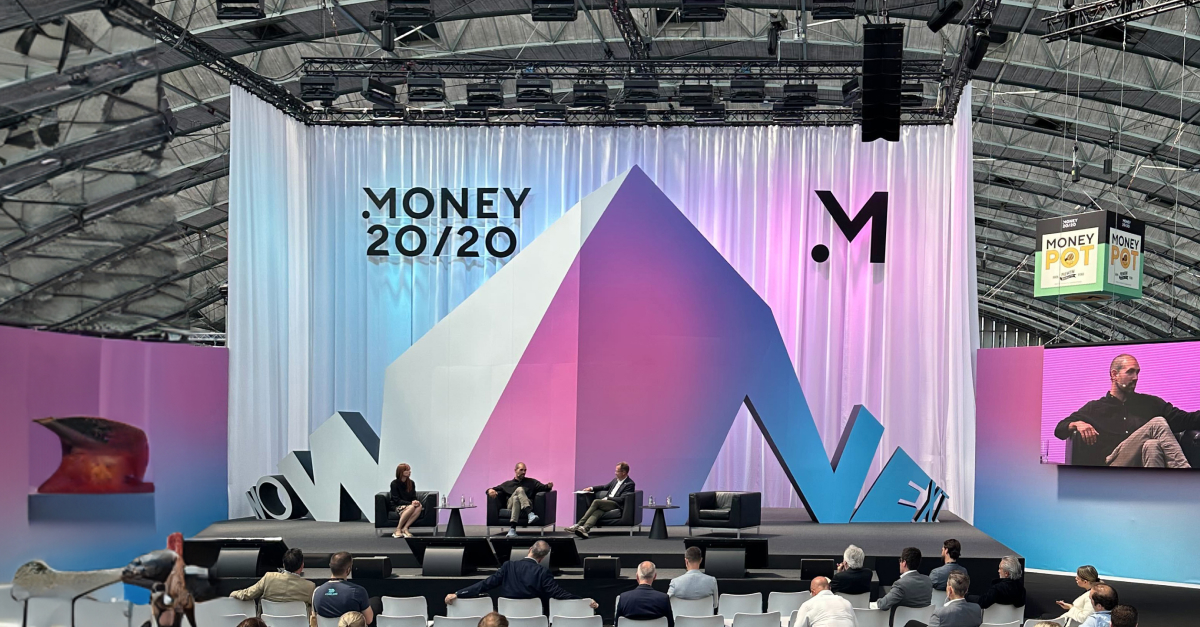
Money20/20 Europe 2026 takes place in Amsterdam and brings together many of the world’s largest players across banking, payments, fintech, AI, crypto, cybersecurity, retail, and financial regulation.
According to the event itself, roughly one-third of attendees are C-suite executives.
That matters because these are not passive attendees showing up for motivational speeches and free tote bags.
This is where partnerships are formed, investment discussions happen, strategic collaborations begin, and future financial infrastructure gets debated.
That’s also why Money20/20 uses the phrase:
“Welcome To The Future Of Money, Now.”
Over the past few years, global finance has evolved far beyond traditional banking discussions.
Now the industry is increasingly focused on AI-powered finance, digital assets, blockchain infrastructure, real-time payments, digital identity, tokenization, embedded finance, and cybersecurity.
And Money20/20 has become one of the places where those shifts are discussed the fastest.
So Why Would YEATU Care About a Fintech Event?
At first glance, culture and finance still seem like completely separate worlds.
Art belongs in galleries. Finance belongs in spreadsheets. Humans enjoy pretending industries live in separate boxes until the market quietly ignores those boxes entirely.
But markets are already moving differently.
Semiconductors were once viewed as low-margin hardware components. Then AI arrived, and suddenly chips became some of the most strategically important assets in the global economy.
Content and cultural IP may be heading in a similar direction. Films. Performances. Exhibitions. Characters. Fandoms. Story worlds.
Things once treated as simple entertainment are increasingly being discussed as scalable intellectual property ecosystems capable of generating long-term value.
That is exactly why YEATU is paying attention. Because at the core of YEATU is a very simple question:
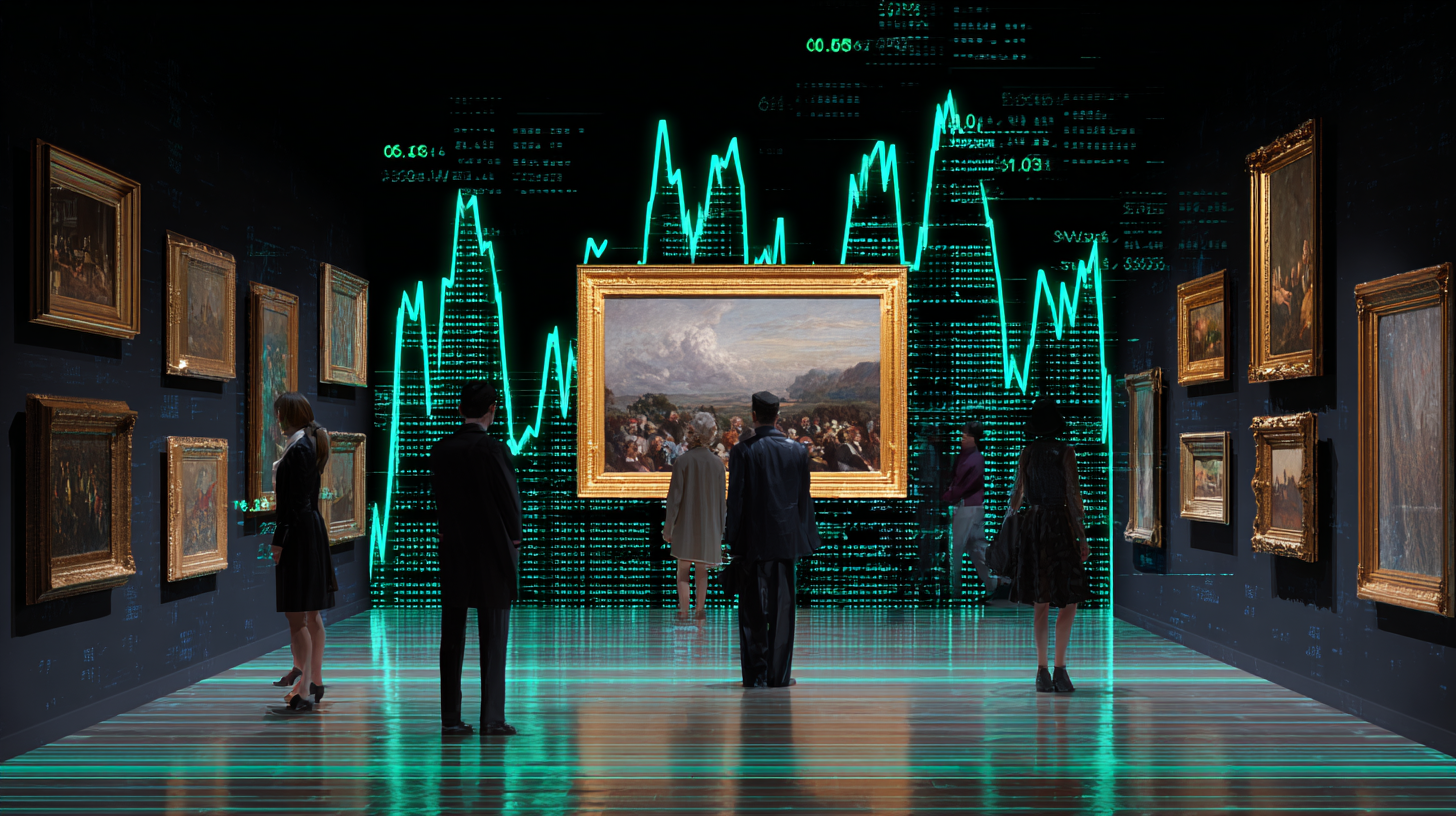
“Can cultural content eventually function like a financial asset?”
What Is YEATU Looking For at Money20/20?
YEATU is not attending simply to say:
“We were there.”
The more important goal is understanding where the market itself is heading.
1. How Is Global Finance Viewing Content and IP?
Across the financial industry, discussions around tokenized real-world assets (RWA), digital ownership, IP monetization, and alternative investment structures are becoming increasingly common.
YEATU also views cultural IP not simply as content people consume, but as something capable of accumulating long-term value.
That makes Money20/20 important because it reveals how global fintech companies are thinking about ownership, monetization, and digital assets at scale.
2. How Will AI and Finance Continue To Merge?
AI conversations are now everywhere in finance.
Not just chatbots. Not just automation.
The industry is actively exploring how AI can assist with risk analysis, fraud detection, investment decisions, data modeling, and valuation systems.
YEATU is also interested in how data and AI can help evaluate cultural IP ecosystems and content value structures. That direction connects closely with EverTreasure’s AI valuation system, VALQ.
And increasingly, the market is beginning to ask:
“Could cultural content itself eventually become measurable through data and AI-driven valuation?”
That question sounds futuristic today.
Then again, humans also thought carrying an entire bank inside a smartphone sounded strange once. Now people emotionally collapse when their payment app takes four extra seconds to load.
What Actually Happens at Events Like This?
Despite what startup documentaries suggest, nobody usually walks onto a stage and instantly signs billion-dollar deals while cinematic music plays in the background.
Reality is much less glamorous.
Most of the time, people are carrying coffee between meetings, exchanging business cards, attending networking sessions, and saying:
“Let’s reconnect after the conference.”
Surprisingly, global finance still runs heavily on human relationships. But that’s exactly why events like Money20/20 matter.
Because they create space for global partnerships, investor meetings, regulatory discussions, strategic collaborations, and trust-building across industries.
Especially in fintech, trust and networks still matter enormously.

Why Does This Ultimately Connect Back to Investing?
Because financial markets are always searching for new forms of value.
And increasingly, markets are paying attention to digital assets, cultural IP, fandom economies, platform-based revenue structures, and AI-driven valuation systems.
Of course, this space is still early.
Cultural finance remains complex. Regulations are evolving. Volatility exists. Many unanswered questions remain.
But the important part is this:
The global financial industry has already started reconsidering what qualifies as an asset in the first place. And Money20/20 is one of the clearest places to watch that conversation happen in real time.
That’s ultimately why YEATU is paying attention too.
“How far can culture and finance eventually connect?”
Nobody fully knows yet. But financial history has always been a cycle of markets assigning value to things previous generations never considered investable.
And right now, the global fintech industry is once again trying to figure out what the next asset class might look like.
YEATU Plans To Keep Tracking These Changes
YEATU does not want to become a platform that only talks about investment products.
We’re also interested in global fintech trends, cultural IP markets, AI-driven valuation systems, creator economies, and the intersection between culture and finance.
Money20/20 is simply one place where many of those conversations are already happening. And YEATU wants to continue sharing those shifts with its community as they evolve.
Curious Where Cultural Finance Is Heading?
Through YEATU’s newsletter and content platform, we continue sharing global fintech and investment trends, changes in the cultural IP market, stories around exhibitions, films, and performances, examples of culture intersecting with finance, and updates on YEATU’s projects and events.
If you’d like to keep track of where YEATU is heading and how the future of cultural finance is evolving, you can sign up for YEATU and opt into marketing communications to receive ongoing newsletters and updates.
Strangely enough, the world seems to be moving toward a future where finance, culture, AI, and fandoms are no longer separate conversations.
Human civilization really looked at art, technology, investment, and internet communities and decided:
“What if we combined all of them at once?”
Risky behavior. Fascinating behavior. But definitely interesting to watch.