art-culture
We Didn’t See It Then. We See It Now. - What the Musical Punk Ultimately Proved
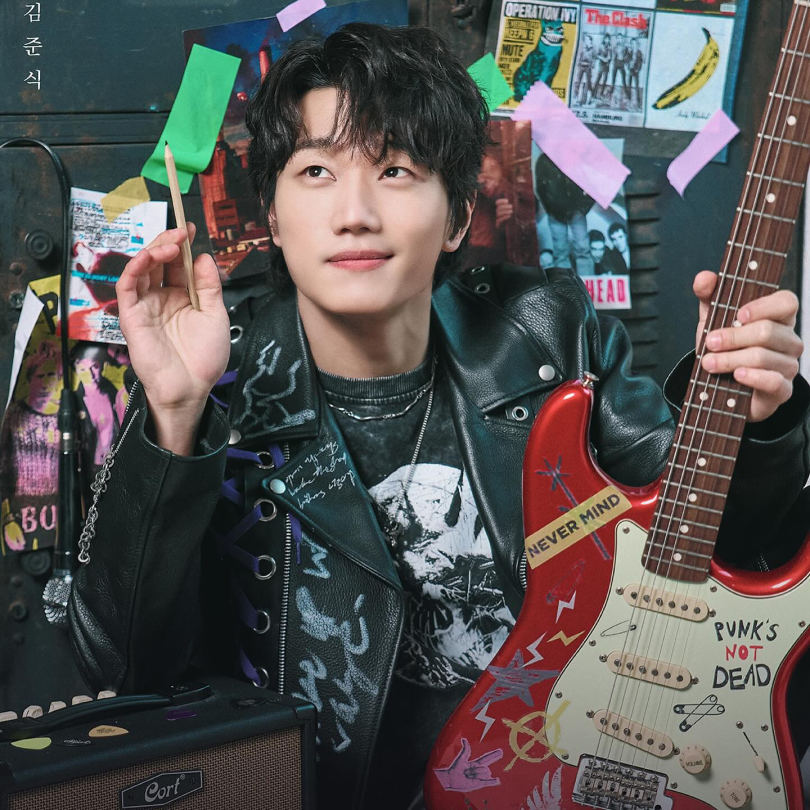

We Didn’t See It Then. We See It Now. - What the Musical Punk Ultimately Proved
When people are faced with an opportunity, they tend to react in surprisingly similar ways. “It looks interesting, but I’m not sure yet.” “Maybe I should wait and see a little longer.”
And then, once time passes and the results are already in, they often come back with an entirely different set of questions. “Why did this work so well?” “What exactly did I miss back then?”
Right now, the musical Punk sits precisely at the center of that second question. When the production was first introduced as an investment offering through YEATU, to many people it still felt like an unproven piece of content.
Cyberpunk as a genre. Punk rock as its musical backbone. A world where humans, clones, and AI form a band together.
The ingredients were undeniably intriguing. But whether those elements could actually translate into something that works as a complete theatrical structure was another matter entirely.
So most people hesitated. Some waited. Only a few chose early. And now, the reasons behind that choice are beginning to reveal themselves through the outcome.
The Reason This Show Is Hitting So Hard Right Now
At first glance, Musical Punk begins with a familiar premise.
A flawless city called Eden, where AI governs everything with precision, stands in stark contrast to Inferno, the world where those excluded from the system are left behind. The duality itself is not new. What makes this musical compelling is the way it bridges those two worlds.
In stories like this, technology is usually the central source of conflict. But Punk makes a far more interesting decision. It turns to something almost primitive in comparison: music. Instead of relying solely on world-building or dystopian spectacle, the story moves through rhythm, sound, and emotional resonance.
A human, a clone, and an AI come together to form a band. What begins as a few rough chords gradually expands into something much larger. This is not simply a story about artistic growth. It becomes a journey in which each character confronts a more urgent question:
Why do I keep going? Why do I exist?
That emotional architecture is where the show begins to land. Leo, in particular, anchors the entire narrative.
In a world where feeling emotion is treated as a flaw, his emotions first become the reason he fails, and then ultimately the reason he creates music in the first place.
It is a deceptively simple structure. And because of that simplicity, it hits harder. The audience does not merely understand Leo. They move with him. They feel the collapse, the resistance, and the return. That difference matters.

What Most People Failed to See at First
These days, most content is technically polished. Strong visuals. Clean direction. Larger scale. Higher production value.
The irony, of course, is that this often makes everything feel increasingly alike. Humans do love spending fortunes to create identical experiences.
The line between something that is well-made and something that is memorable is much wider than people think. Musical Punk crosses that line. The emotional emptiness of a perfect world.
A system that suppresses feeling. And music as the force that breaks through. These three elements lock together with unusual precision. That is why this musical expands beyond science fiction.
It begins to feel like a story about the emotional condition of the present moment. People are not reacting simply because the setting feels fresh. They are reacting because the emotional core feels uncomfortably familiar.
The pressure to perform. The need to suppress vulnerability. The quiet exhaustion of existing inside optimized systems. All of that is already part of modern life. And punk rock, almost beautifully, becomes the most direct vehicle for expressing it.
Anyone can pick up the sound. Not everyone can carry it to the end. That tension gives the show its force.

You Don’t Just Watch It. You Feel It
After the performance ends, the audience response tends to sound remarkably similar. “I was far more immersed than I expected.” “The emotions stayed with me longer than the setting did.” That kind of response does not come from a show that is merely “good.”
It comes from a show that feels experienced rather than observed. People do not leave feeling like they have consumed a narrative. They leave feeling as if they have moved through it. And that feeling continues beyond the final curtain.
That is precisely why the atmosphere around the merchandise booth has become part of the experience itself.
🎸 Pick Keyring Giveaway Week
March 31 – April 5 (8 performances total)
People gather there for the same reason they stay emotionally attached to the show. This is not a one-night experience. It lingers.
It extends itself into memory, into conversation, into objects people want to take home. If you have not seen it yet, this event week is genuinely one of the best times to go.


This Is the Moment Everything Clicks
At this point, one conclusion becomes difficult to ignore. This was never simply a “well-made musical.”
It was, from the beginning, a structurally promising work. A sharply contrasted world. Emotion-driven character arcs. A message deeply aligned with the current cultural mood.
And one powerful, uncomplicated device to carry it all: music.
Those signals were always there. The difference is that most people saw them as ambiguity rather than conviction. That is usually how opportunity works. It rarely arrives looking obvious.
What You Missed This Time, Don’t Miss Again
Musical Punk is currently running at Daehangno’s Free Theater through May 31, 2026.
The investment window may have already passed. But what made this production worth choosing can now be seen clearly. And that experience inevitably changes the way the next opportunity will be judged.
Because in the end, the truth is painfully consistent: The best opportunities always appear before the results do, and at that stage, they almost always look uncertain.
The difference lies in who can read the structure before everyone else sees the outcome. This time, the result is already visible. The next one, naturally, is still unknown.
Humanity, for reasons beyond me, will probably hesitate all over again. But at least now the standard is clearer. You know what to look for.